• Link to LinkedIn
  • Link to Facebook
  • Link to Instagram
  • Link to Youtube
  • Link to X
SUBSCRIBE TO NEWSLETTER
Joel Kotkin
  • About
    • Events
  • Media
    • In the News
    • Videos
  • Books
  • Articles
    • Demographics
    • Urban Affairs
    • The Economy
    • Politics
    • Rural Policy
    • Reports
    • Religion
    • California
  • Podcast
  • Speaking
  • Contact
  • Click to open the search input field Click to open the search input field Search
  • Menu Menu
You are here: Home1 / Articles2 / Demographics

Winners and Losers: The Global Economy After COVID

June 8, 2021/in Demographics, The Economy

The COVID-19 pandemic has transformed the world economy in ways that will be debated by pundits and future historians for decades to come. Yet, as hard as it is to predict a disrupted future accurately, the pandemic (not to mention its probable successors) looks likely to produce clear economic winners and losers. The top digital companies—Amazon, Apple, Tencent, Microsoft, Google, Facebook, Ant, Netflix, and Hulu—have thrived during quarantines and the ongoing dispersion of work. These are the most obvious winners in what leftist author Naomi Klein has called a “Screen New Deal” that seeks to create a “permanent and profitable no-touch future.” Since 2019, Facebook, Apple, Amazon, Microsoft, and Google have added over two-and-a-half trillion dollars to their combined valuation, and all enjoyed record breaking profits in 2020.

But it’s not just the tech oligarchs who have benefited from the pandemic disruption. Companies that keep the basic economy functioning—firms dealing in logistics, for example, or critical metals or food processing—have become, if anything, even more important. With the shipping supply chain disrupted due to the pandemic, logistics giant Maersk is set to increase its inland-based operation with the acquisition of the Swiss-based broker KGH Customs Services. The company reported its best quarter ever in the first quarter of 2021, launching a $5 billion share buyback scheme. And although the developing world has been hit hard by declines in tourism and investment, mining giants such as Glencore are investing billions to challenge China’s market dominance in rare earth minerals. The global market for cobalt is expected to double by 2025 and has launched a new “scramble for Africa,” which is also raising moral questions about whether or not the green oligarch’s love of the planet outweighs human rights abuses such as the practice of child labor in the Democratic Republic of Congo.

Even some high street businesses which have taken major hits are finding new niches. Many small businesses may never return to pre-COVID levels, as people have become used to the convenience of online purchases. Nevertheless, some are finding new uses for redundant malls, and have discovered new ways to reach more customers using social media and technology. Lower property prices are also opening up potential opportunities for entrepreneurs in pricey places such as Manhattan, San Francisco, or London. Pestilence re-shapes economies.

In his 2017 book The Fate of Rome: Climate, Disease, and the End of an Empire, historian Kyle Harper argues that plague, as well as climate change, undermined the Roman empire, creating conditions that boosted the barbarian warlords who would later become the Medieval aristocracy. The lethal plagues of the Middle Ages likewise disrupted the great Mongol empire, at the time the largest in history, and in conjunction with cooling temperatures, undermined the stability of the great Silk Road and ended the Pax Mongolica. This opened the door to the Age of Exploration and Europe’s maritime conquest of the world. Within Medieval Europe, the Black Death killed as much as 40 percent of the population, but also precipitated the rise of the Third Estate, and in some places raised wages for scarce labor. “People were fewer,” noted historian Barbara Tuchman, “but they ate better. The pandemic also led to greater emphasis on long-distance navigation.”

During the current crisis, disintermediation has been the primary driver of the post-pandemic economy. The novel coronavirus forced businesses to adapt quickly to new circumstances, and as with all economic crises, created winners and losers. The lockdowns accelerated the use of digital technology for work, retail, and entertainment. This has not only helped the big firms but also produced a whole crop of new startups, many of which address the shift to online work. The tech oligarchies now face competition from decentralized networks based on blockchain technology which is less vulnerable to domination by giant firms with algorithms that are designed to eliminate the incentive structures that lead to central node control and promote monopolistic behavior. Domains such as Lokinet, Ethereum, Odysee, and Urbit seek to give users ownership of their own data. Even Google’s near-monopoly of web browser supremacy is set to be challenged by data-privacy-conscious alternatives such as DuckDuckGo, which has seen a 62 percent growth in search results in 2020. Users are clearly becoming more conscious of privacy and data ownership.

Read the rest of this piece at Quillette.


Joel Kotkin is the author of The Coming of Neo-Feudalism: A Warning to the Global Middle Class. He is the Presidential Fellow in Urban Futures at Chapman University and Executive Director for Urban Reform Institute. Learn more at joelkotkin.com and follow him on Twitter @joelkotkin.

Hügo Krüger is a Structural Engineer with working experience in the Nuclear, Concrete and Oil and Gas Industry. He was born in Pretoria South Africa and moved to France in 2015. He holds a Bachelors Degree in Civil Engineering from the University of Pretoria and a Masters degree in Nuclear Structures from the École spéciale des travaux publics, du bâtiment et de l’industrie (ESTP Paris). He frequently contributes to the South African English blog Rational Standard and the Afrikaans Newspaper Rapport. He fluently speaks French, Germany, English and Afrikaans. His interests include politics, economics, public policy, history, languages, Krav Maga and Structural Engineering.

Homepage photo: Steve Jurvetson, via Flickr under CC 2.0 License.
https://joelkotkin.com/wp-content/uploads/2021/06/jeff-bezos_photo-by-jurvetson.jpg 675 1200 Joel Kotkin and Hügo Krüger /wp-content/uploads/2017/01/jkotkin_logo.png Joel Kotkin and Hügo Krüger2021-06-08 07:25:062021-06-06 12:38:02Winners and Losers: The Global Economy After COVID

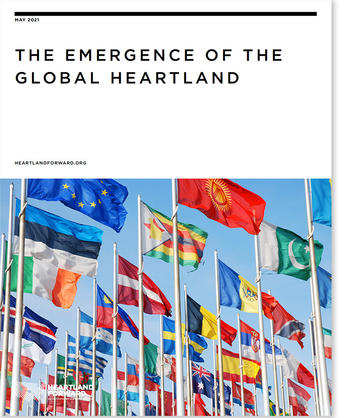
The Emergence of the Global Heartland

May 28, 2021/in Demographics, Reports, The Economy

Report: Emergence of the Global Heartland

A major shift in the demographic evolution of America is occurring, largely out of sight in the national media, but profoundly affecting communities throughout the Heartland.

The 20 state region, which extends between the Appalachians and the Rockies, has for generations been largely unaffected by the massive movement of people from abroad that has so dramatically transformed the great metropolitan regions of coastal America.

In the national media, the Heartland represented a region, as the New York Times described it, as ’not far from forsaken,’ a depopulating place where the American dream has come and gone. Others have seen the region as an unreconstructed mecca for intolerance, one that had few immigrants and poor race relations and seems destined to suffer for it. As one professor at Vanderbilt suggested recently, the region was “dying from whiteness” and that its “politics of racial resentment is killing America’s heartland.”

Perhaps it is time to change that narrative. Over the past decade, the Heartland’s share of the foreign-born population has risen from 23.5 percent in 2010 to 31.1 percent in 2019. This shift can be seen in many Heartland communities, some such as Louisville, Columbus and Nashville Read more

https://joelkotkin.com/wp-content/uploads/2021/05/emergence-of-the-global-heartland.jpg 675 1200 Joel Kotkin /wp-content/uploads/2017/01/jkotkin_logo.png Joel Kotkin2021-05-28 07:25:262024-01-17 17:33:07The Emergence of the Global Heartland

The Geography of COVID-19

May 11, 2021/in Demographics, Urban Affairs

The ongoing pandemic is reshaping the geography of our planet, helping some areas and hurting others. In the West, the clear winners have been the sprawling suburbs and exurbs, while dense cores have been dealt a powerful blow. The pandemic also has accelerated class differences and inequality, with poor and working class people around the world paying the dearest price. These conclusions are based on data we have repeatedly updated. Despite some variations, our earlier conclusions hold up: the virus wreaked the most havoc in areas of high urban density. This first became evident in the alarming pre-lockdown fatalities that occurred in New York City and the suburban commuting shed from which many of the employees in the huge Manhattan business district are drawn. Similar patterns have been seen in Europe and Asia as well.

The problem is not density per se but rather the severe overcrowding associated with poverty in high density areas. Overcrowded physical proximity often includes insufficiently ventilated spaces such as crowded public transit, elevators, and employment locations, especially high-rise buildings, which often have windows that cannot be opened. Overcrowded bars, restaurants, and other retail establishments are also a part of the problem. Professor Shlomo Angel head of the New York University Urban Expansion Project at the Marron Institute and the NYU Stern Urbanization Project and principal author of A Planet of Cities and the Atlas of Urban Expansion explains:

It is important to increase density literacy among politicians, professionals, and activists to make it clear that the density that contributed to the pandemic, overcrowded multigenerational housing, mass events, crowded transit cars, or crowded bars and restaurants, is not the kind of density we need to increase to make cities more affordable and to combat climate change. The densification we need involves making room in cities, adding floor space so that more people can occupy the same area without overcrowding.

Mixed evidence on lockdowns

Overcrowding intensifies exposure density. Recognizing this, governments imposed lockdowns and social distancing measures intended to reduce crowding and viral transmission. But lockdowns can be effective in some situations and not in others. Social distancing and remote work can readily reduce the exposure density of overcrowded trains, workplaces, elevators, and retail establishments, especially in the densest urban cores. Restaurants and bars were forced to close, and as many employers switched to remote working, fatality rates dropped substantially.

But this approach has exacted a steep cost. In New York, San Francisco, Chicago, and Toronto, suburban rail ridership declined by between 75 and 90 percent compared to the previous year. There has been a precipitous decline in the economies of the central business districts (CBDs) of these metropolitan areas, which have suffered economically more than most of their smaller counterparts. City Journal has reported that, in 2020, “New York City lost 500,000 private-sector jobs. Its office buildings are only 15 percent occupied. Ninety percent of the city’s restaurants failed to pay their December 2020 rent, and 5,000 have shut down altogether. Employment in the city’s arts and entertainment sector has plummeted 66 percent. And, perhaps most alarming: 300,000 New Yorkers from high-income neighborhoods have filed change-of-address forms with the Postal Service.” Rents are now the lowest in a decade.

Much of the employment activity central to modern cities—finance, marketing, technology, media, consulting—has been transferred to the “cloud model” of employment. Even in places like Hong Kong and Tokyo that have avoided the worst of the pandemic, there has been a significant reduction in CBD on-site work as remote work has increased. An ominous sign for the future: considerable evidence that productivity has improved or at least remained the same.

Nevertheless, social distancing and dispersion have proven successful in containing the spread of the virus. Our analysis of county fatality rate data shows that, in April 2020, the fatality rate in the New York combined statistical area (31 economically connected counties) was seven times the national rate. By July 2020, the CSA rate had fallen below the national rate. But the price was empty streets, sidewalks, office buildings, as well as bars and restaurants all essential to maintaining a dynamic city.

The future of cities

How many workers will return to the CBDs remains an open question, but it seems likely to be many fewer than before the pandemic. Even as we write, new lockdown measures are being implemented in Ontario, and it seems fair to ask when lockdowns will be sufficiently relaxed for urban cores to begin operating at their new normal. Downtowns have recovered far less quickly than suburban, exurban, and small towns. City centers in London, Paris, Berlin, Melbourne, Sydney, Milan, and elsewhere have suffered huge physical employment losses and increases in remote work.

Read the rest of this piece at Quillette.


Joel Kotkin is the author of The Coming of Neo-Feudalism: A Warning to the Global Middle Class. He is the Presidential Fellow in Urban Futures at Chapman University and Executive Director for Urban Reform Institute. Learn more at joelkotkin.com and follow him on Twitter @joelkotkin.

Wendell Cox is principal of Demographia, an international public policy firm located in the St. Louis metropolitan area. He is a founding senior fellow at the Urban Reform Institute, Houston, a Senior Fellow with the Frontier Centre for Public Policy in Winnipeg and a member of the Advisory Board of the Center for Demographics and Policy at Chapman University in Orange, California. He has served as a visiting professor at the Conservatoire National des Arts et Metiers in Paris. His principal interests are economics, poverty alleviation, demographics, urban policy and transport. He is co-author of the annual Demographia International Housing Affordability Survey and author of Demographia World Urban Areas.

Homepage photo: Prayitnophotography via Flickr, under CC 2.0 License.

https://joelkotkin.com/wp-content/uploads/2021/05/times-square.jpg 675 1200 Joel Kotkin and Wendell Cox /wp-content/uploads/2017/01/jkotkin_logo.png Joel Kotkin and Wendell Cox2021-05-11 07:25:072021-05-13 19:24:01The Geography of COVID-19

America’s Post-Pandemic Geography

May 10, 2021/in Demographics, Rural Policy, The Economy, Urban Affairs

Even as vaccination increases across the United States and an end to the tragedy of the Covid-19 pandemic seems in sight, the economic, fiscal, political, and geographic fallout from the virus cannot be overstated: a massive public health crisis that left more than half a million Americans dead, an economic catastrophe that caused record unemployment and small-business closures, and a seismic political event that surely helped tip the presidential election. The pandemic will pass, and the economy will revive, as it is already doing. But in geographic terms, today’s Covid-precipitated crises may well prove to be the most transformative event that America has experienced since the great migration to the suburbs after World War II. After hitting record lows, mobility is up as a result of the pandemic. Between 14 million and 23 million Americans say that they are likely to move as a result of their ability to work remotely, according to research by economist Adam Ozimek. These geographic shifts are even more critical because they point in many directions and represent less a fundamental break with the past and more an acceleration of changes already under way in how we live and work.

America’s economic geography has long been shaped by the interplay of pull and push forces. On the one hand, centrifugal forces pull some people out of cities: families seek more affordable space, backyards, and access to better schools. With the wider scope of choice that remote work affords, some are casting their nets wider and moving farther afield, not just to suburbs but also to other cities, smaller metro areas, and even rural communities. On the other hand, centripetal forces remain that push other groups and activities toward urban centers. College-educated young people in their mid-twenties to mid-thirties have accounted for roughly half the revival of close-in urban neighborhoods (those located near a metro area’s central business district) over the past decade, according to research by Joe Cortright of City Observatory. They are likely to do so, perhaps even more profoundly, in the decade ahead, propelled in part by falling urban real-estate prices. Superstar cities may regain some of their former creativity as artists, musicians, writers, and the like, many uprooted by the pandemic, can once again afford to live in them.

It’s hard to predict how this will play out in the long run, but the pandemic has placed a new burden on all communities. Big cities, Sunbelt boomtowns, small urban regions, and rural areas alike must develop effective strategies for recovery in a post-pandemic world.

The pandemic hit superstar cities like New York and London first and hardest. With their central business districts turned into ghost towns, big cities have suffered a blow from which they will need years to rebound. New York’s midtown and Wall Street still remain noticeably empty. Broadway theaters are still shuttered. San Francisco’s office district, home to many leading tech companies, stands similarly empty.

Dense cities suffered the most total fatalities largely because, as globally connected places, they were hit by the virus in its first, deadliest phase. Time and research have shown, however, that they are not uniquely vulnerable. By the fall of 2020, the second wave of infections and death had spread out across the country to smaller states and rural communities. While large urban centers and big states still have the highest overall death tolls, more sparsely populated places overtook them on a per-capita basis, with North Dakota logging the nation’s highest Covid death rate in the fall. The danger lies not in density per se, but in overcrowding: the number of people per square foot, as opposed to square mile. (See “Problem: Overcrowding,” New York City: Reborn, 2021.) A kind of “exposure density” thus seems key to the spread of the virus.

Yet superstar cities are not about to disintegrate. Cities are more resilient than in the past. The swift distribution of vaccines makes urban comebacks more likely, and far more rapid, than those of ancient cities rising after eruptions of the plague. London recovered from cholera, and New York added 2 million people in the wake of the Spanish flu. Berlin survived Hitler, World War II, and a half-century of partition. New York roared back after 9/11. Large global cities are incredibly resilient places. (See “The Enduring City,” New York City: Reborn, 2021.)

But part of the exodus from New York and San Francisco is rooted in factors that will outlast the virus and that were already in play earlier. Both cities lost people before the pandemic, largely because of their increasing unaffordability. The rate of growth in America’s biggest and most expensive cities began to decline as early as 2015. The pandemic has worsened the new urban crisis of rampant gentrification, high living costs, and class and racial division—all sharply dramatized amid the wave of protests and riots in the summer of 2020.

Read the rest of this piece at City Journal.


Richard Florida is a professor at the University of Toronto and a senior fellow at Heartland Forward. Joel Kotkin is the author of The Coming of Neo-Feudalism: A Warning to the Global Middle Class. He is the Presidential Fellow in Urban Futures at Chapman University, a senior fellow at Heartland Forward, and Executive Director for Urban Reform Institute. Learn more at joelkotkin.com and follow him on Twitter @joelkotkin.

Photo: BlueRidgeKitties via Flickr, under CC 2.0 License.

https://joelkotkin.com/wp-content/uploads/2021/05/charlotte-nc_h.jpg 675 1200 Joel Kotkin and Richard Florida /wp-content/uploads/2017/01/jkotkin_logo.png Joel Kotkin and Richard Florida2021-05-10 09:40:362021-05-10 09:40:36America’s Post-Pandemic Geography

Yeomanry’s Global Decline

May 4, 2021/in Demographics, The Economy

For much of the last part of the 20th Century, the world’s middle class was ascendant, expanding and, in most countries, firmly in control of national politics and culture. Yet in more recent decades, this process has been slowly reversed, in the United States as well as in Europe and, increasingly, East Asia.

Read more

https://joelkotkin.com/wp-content/uploads/2021/04/patch-of-prairie-sand-reed-grass-usnara.jpg 675 1200 Joel Kotkin /wp-content/uploads/2017/01/jkotkin_logo.png Joel Kotkin2021-05-04 07:25:062021-05-03 17:42:47Yeomanry’s Global Decline

Could COVID Exodus Speed the Heartland Revival?

April 28, 2021/in California, Demographics, The Economy, Urban Affairs

Over the past two decades America’s largest urban areas enjoyed a heady renaissance, driven in large part by the in-migration of immigrants, minorities and young people. But even as a big-city dominated press corps continued to report on gentrification and displacement, those trends began to reverse themselves in recent years as all three of those populations started heading in ever larger numbers to suburbs, sprawling sunbelt boomtowns and smaller cities and out of the biggest ones.

That shift preceded the COVID pandemic, but has rapidly accelerated with the expansion of remote work, which has undermined the economic basis for high-end urban and post-industrial economies. Meanwhile, the severe lockdowns Democratic governors and mayors favored devastated the service and small business economies that had provided sustenance to immigrant and minority entrepreneurs and workers.

The same “canaries in the coal mine” that spurred America’s urban renaissance have been leaving its big cities in growing numbers since 2014, notes demographer Wendell Cox. New York, Los Angeles and Chicago have all begun to lose population while people have flocked to new employment hubs like Austin, Dallas, Phoenix, Columbus and Nashville that have led the way in terms of both overall new jobs and high-end business and professional service jobs.

Nowhere is this shift more evident than with immigrants. The share of the foreign born settling in big coastal “gateways” has plunged from 44 percent in 2010 to barely 35 percent in 2019. Foreign-born populations, notes Cox in research for the think tank Heartland Forward, stagnated or even declined in New York, Los Angeles and Chicago as they surged in Houston (over 25 percent growth), Dallas-Ft Worth (30 percent) Charlotte (nearly 40 percent) and Nashville (a remarkable 44 percent).

Houston, in fact, is now the most diverse major metropolitan area in the country. In 1960, Harris County, which includes Houston and many of its suburbs, was 70 percent white, non-Hispanic and 20 percent African American. Today, the county’s total population is 31 percent white and non-Hispanic, 42 percent Hispanic, 19 percent Black and 8 percent Asian. The share of foreign-born Houstonians now approaches one-fourth of the population—almost twice the average for the nation’s 50 most populous metros.

More surprising still has been the equally rapid move of immigrants to smaller cities such as Fayetteville, Ark., Knoxville, Tenn,; Cedar Rapids, Iowa, Springfield, Mo., and Fargo, N.D. The fastest growth in foreign-born populations has been in areas with traditionally low immigrant concentrations. Where the foreign-born population grew by 10 percent nationally in the last decades, in states like Georgia, Kentucky, South Carolina and the Dakotas it has expanded by 30 percent.

Racial minorities, too, are heading increasingly to the sunbelt boom towns, the south and to smaller cities. The surges in Latino, Asian and African American growth are not in Los Angeles, New York, Chicago, or the Bay Area, according to an analysis by Wendell Cox for the Urban Reform Institute, but in Atlanta, Boise, Salt Lake City, Phoenix and Las Vegas.

Again, economics is a key factor. Middle-class job creation has been generally stronger in these communities and, due to less regulation and lower taxes, costs are lower. African-American real incomes in Atlanta are more than $60,000, compared to $36,000 in San Francisco and $37,000 in Los Angeles. The median income for Latinos in Virginia Beach-Norfolk is $69,000, compared to $43,000 in Los Angeles, $47,000 in San Francisco and $40,000 in New York City. The highest Asian median household incomes are in Raleigh, Jackson, Fayetteville (AR-MO) and Austin.

Read the rest of this piece at Daily Beast.


Joel Kotkin is the author of The Coming of Neo-Feudalism: A Warning to the Global Middle Class. He is the Presidential Fellow in Urban Futures at Chapman University and Executive Director for Urban Reform Institute. Learn more at joelkotkin.com and follow him on Twitter @joelkotkin.

Photo: Brian Stansberry via Wikimedia under CC 3.0 License.

https://joelkotkin.com/wp-content/uploads/2021/04/KnoxvilleTN-hall-of-fame-drive.jpg 675 1200 Joel Kotkin /wp-content/uploads/2017/01/jkotkin_logo.png Joel Kotkin2021-04-28 07:25:222021-04-26 10:35:33Could COVID Exodus Speed the Heartland Revival?

Feudal Future Podcast — Education Exposed: Learning in a Post-COVID World

April 26, 2021/in Demographics, Podcast

On this episode of Feudal Future, hosts Joel Kotkin and Marshall Toplansky are joined by Dr. Roxanne Greitz Miller to discuss today’s education system and how it is challenged to respond to cultural shifts and access to information.

Read more
https://joelkotkin.com/wp-content/uploads/2021/04/feudal-future-education-exposed.jpg 675 1200 Joel Kotkin and Marshall Toplansky /wp-content/uploads/2017/01/jkotkin_logo.png Joel Kotkin and Marshall Toplansky2021-04-26 12:37:162021-04-26 12:38:12Feudal Future Podcast — Education Exposed: Learning in a Post-COVID World

What Happened to Social Democracy?

April 10, 2021/in Demographics, The Economy, Urban Affairs

In a world that seems to be divided between neoliberal orthodoxy and identitarian dogmas, it is possible to miss the waning presence of traditional social democracy. Born of the radical Left in Marx’s own time, social democrats worked, sometimes with remarkable success, to improve the living standards of working people by accommodating the virtues of capitalism. Today, that kind of social democracy—learned at home from my immigrant grandparents and from the late Michael Harrington, one time head of the American Socialist Party—is all but dead. This tradition was, in retrospect, perhaps too optimistic about the efficacy of government. Nevertheless, it sincerely sought to improve popular conditions and respected the wisdom of ordinary people.

In its place, we now find a kind of progressivism that focuses on gender, sexual preference, race, and climate change. Abandoned by traditional Left parties, some voters have drifted into nativist—and sometimes openly racist—opposition while more have simply become alienated from major institutions and pessimistic about the future.

The revolution in class relations

Social democracy was a product of the inequities of the industrial era and the consequent solidarity that flourished among working people. This often resulted in greater justice for racial minorities. The German Social Democrat Eduard Bernstein developed an “evolutionary” ideology based on gradualism, practical results, and a commitment to democratic norms. Observing late-19th century Britain, where unions were accepted even in business circles, Bernstein noticed that working conditions, contrary to Marxist dogma, were steadily improving. He believed that the proletariat was evolving from an oppressed underclass into a more upwardly mobile group, whose goal was to find “an appropriate status in industrial society.” For their efforts, Social Democrats were denounced as “social fascists” by Stalin, and Antifa’s predecessors—the German Antifaschistische Aktion—spent at least as much time fighting them as fighting the Nazis. A fatal error.

After the Second World War, however, social democrats enjoyed considerable success while the remarkable productivity of the private sector helped transform the once-forlorn proletariat into something more bourgeois in aspiration. A study covering the United Kingdom, the Netherlands, and the United States shows that all three saw a rapid decline in the concentration of wealth until the 1970s. Their program focused on physical needs such as boosting access to electricity and improving public health and education.

Never before had so much prosperity and relative economic security been so widely enjoyed. By the 1960s, the American labor movement could boast of “developing a whole new middle class,” said Walter Reuther, president of the United Auto Workers. Industrial laborers could afford to buy homes, send their kids to college, and live the kind of life only the affluent had previously enjoyed. Western Europe benefited from the same process—economic growth helped finance a welfare state that provided greater security and improved the prospects of most families; the rapid growth of export industries, in particular, was an integral part of the original Swedish social model of increasing wages without inflation.

Starting in the 1970s, such things as foreign competition, mass immigration from developing countries, automation, and the growing financialization of economic power undermined this progress. In the United States, data from the Census Bureau show that the share of national income going to the middle 60 percent of households has fallen to a record low since the 1970s. Wealth gains in recent decades have gone overwhelmingly to the top one percent of households, and especially to the top 0.5 percent. Social mobility has declined in over two-thirds of European Union countries, including Sweden. Across the 36 wealthier countries of the Organization for Economic Cooperation and Development, the richest citizens have taken an ever-greater share of national GDP while the middle class has shrunk. Much of the global middle class is heavily in debt—mainly because of high housing costs—and “looks increasingly like a boat in rocky waters,” suggests the OECD.

Parties repositioning

One might assume that this concentration of wealth would energize traditional working class parties—Labour in Britain and Australia, the Liberals in Canada, the Democrats in the US—but they shifted their focus away from blue-collar and lower-middle-class workers. Instead, leftwing parties are increasingly peopled by, and cultivated support from, the well-educated professional class—now an estimated 15 percent of the US work force—along with the corporate elites and academic clerisy. These classes have done well over the past few decades, while the traditional lower-middle and working classes have languished.

Read the rest of this piece at Quillette.


Joel Kotkin is the author of The Coming of Neo-Feudalism: A Warning to the Global Middle Class. He is the Presidential Fellow in Urban Futures at Chapman University and Executive Director for Urban Reform Institute. Learn more at joelkotkin.com and follow him on Twitter @joelkotkin.

Photo credit: Nicolas Nieves-Quiroz via Unsplash under CC0 1.0 License.

https://joelkotkin.com/wp-content/uploads/2021/04/rose-of-social-democracy_nicolas-nieves-quiroz_unsplash.jpg 675 1200 Joel Kotkin /wp-content/uploads/2017/01/jkotkin_logo.png Joel Kotkin2021-04-10 07:25:462021-04-08 17:39:45What Happened to Social Democracy?

Trust the Science: The Blue State Surge is Real

April 7, 2021/in Demographics, Urban Affairs

For months the conventional wisdom among Democrats, amplified by their obliging claque in the media, was that lockdowns played an essential role in containing COVID-19. The great heroes, in addition to Anthony Fauci, were hardline governors like Michigan’s Gretchen Whitmer, California’s Gavin Newsom and, most of all, New York’s Andrew Cuomo.

Yet now, more than a year later, the lockdown states—starting with New York and New Jersey—are again leading the nation in coronavirus infections and deaths per capita.

By contrast, some of the states with Republican governors who were routinely castigated for unlocking things and supposedly killing their residents, most notably Florida, Georgia and Texas, did indeed suffer an increase in fatalities last summer. But since then, even after opening their economies, these states continue to suffer fatality rates per capita well below those of the locked-down Northeastern states and about equal to California, which has maintained one of the nation’s strictest lockdowns.

What emerge from these trends are some clear issues with transmission that transcend lockdowns, mask mandates and other punitive measures. However justified, such actions have not addressed the fundamental reasons why some geographies and populations have suffered so much more than others. That’s to say that while the blue state governors aren’t necessarily to blame for the surges their states are experiencing, it’s clear that the economically and personally disruptive measures did not have the expected impact.

What did make a big difference, it turns out, is not so much the severity of lockdowns but pre-existing conditions. The likely cause here can be best identified as “exposure density” brought on by crowded housing, transit, and office environments.

That helps explain why, after New York City’s suburbs were hit hard in the first wave, the current surge has hit the outer boroughs, where a much higher share of workers have had little choice but to continue taking the subway or other transit.

Nationwide, urban exposure to the pandemic also reflects their greater inequality. Higher rates of poverty and overcrowded housing accentuate the worst effects of the pandemic, which tore through impoverished parts of New York, Houston, Los Angeles County, Chicago’s poor south side, and similar areas. The Bronx, for example, has suffered an 80 percent worse death rate than denser yet wealthier Manhattan, while Brooklyn’s rate is 50 percent worse than Manhattan’s.

This can be seen also in the Los Angeles metropolitan area, whose sunshine-blessed and auto-dominated society suffered a fatality rate 60 percent below that of transit-oriented metro New York. Yet while fatality rates have been very low in affluent areas with fewer crowded households, such as west Los Angeles and Irvine, they have been much higher in areas like east and south Los Angeles. In Orange County, the fatality rate in affluent, single family dominated Irvine is 22 per 100,000 compared with 195 in neighboring Santa Ana, which is heavily Hispanic, poor and suffers crowded housing conditions.

This is an international phenomenon seen across the world’s great urban areas. During the first lockdown, almost 20 percent of the Parisian population fled to the countryside, accelerating an escapist trend that had been underway for years: the core city of Paris has lost 700,000 residents (nearly 25 percent of its population) since 1954, while millions of new inhabitants have swelled the suburban population. Meanwhile, the densely packed Department of Seine-Saint-Denis, a place synonymous there with inner ring suburban poverty, had a staggering 130 percent excess mortality rate when the virus first hit last year.

Read the rest of this piece at The Daily Beast.


Joel Kotkin is the author of The Coming of Neo-Feudalism: A Warning to the Global Middle Class. He is the Presidential Fellow in Urban Futures at Chapman University and Executive Director for Urban Reform Institute. Learn more at joelkotkin.com and follow him on Twitter @joelkotkin.

Wendell Cox is principal of Demographia, an international public policy firm located in the St. Louis metropolitan area. He is a founding senior fellow at the Urban Reform Institute, Houston, a Senior Fellow with the Frontier Centre for Public Policy in Winnipeg and a member of the Advisory Board of the Center for Demographics and Policy at Chapman University in Orange, California. He has served as a visiting professor at the Conservatoire National des Arts et Metiers in Paris. His principal interests are economics, poverty alleviation, demographics, urban policy and transport. He is co-author of the annual Demographia International Housing Affordability Survey and author of Demographia World Urban Areas.

Photo credit: Matryx via Pixabay under CC0 1.0 License.

https://joelkotkin.com/wp-content/uploads/2021/04/coronavirus-illustration.jpg 684 1280 Joel Kotkin and Wendell Cox /wp-content/uploads/2017/01/jkotkin_logo.png Joel Kotkin and Wendell Cox2021-04-07 07:25:562021-04-07 12:54:17Trust the Science: The Blue State Surge is Real

The Death of the American City

March 26, 2021/in Demographics, The Economy, Urban Affairs

When my grandparents migrated to New York from Russia over a century ago, they found a city that was hardly paradise, but one that provided a pathway towards a better life. Life was tough, crowded and always a paycheck from poverty. My relatives were poor, but so was everyone; eventually, they all bought houses or apartments, and entered the middle class. As for crime in their native Brownsville, the home of Murder, Incorporated and other villainous enterprises, it rarely impacted “civilians”; my mother would tell me how a young girl could still walk across Prospect Park without fear of assault.

Today’s urban promise is, however, vastly different — not only in New York, but San Francisco and Los Angeles, London and Paris. No longer cities of aspiration, they are increasingly defined by an almost feudal hierarchy: the rich live well, protected by private security and served by local coffee shops and trendy clubs.

Meanwhile, the working class struggles to pay rent, possesses no demonstrable path to a better life and, as a result, often migrates elsewhere. Crime rates are spiking and homelessness, once an exception, is increasingly widespread. Those very streets once said to be “paved with gold” are now are filled with discarded needles, excrement and graffiti.

Indeed, what we are now witnessing is the decline of former New York Mayor Michael Bloomberg’s description of the city as “a luxury product”. Today, that sense of “luxury” has all but vanished, with modern urban economies promoting class divisions rather than upward mobility. Amid all the hoopla about urban revival, the truth is that entrenched urban poverty in the US — places where 30% or more of the population live below the poverty line — actually grew in the first decade of the new millennium, from 1,100 to 3,100 neighbourhoods.

Even the New York Times admits that, in the past decade, cities have gone from “engines of growth and opportunity” to places where class relations are increasing fixed, with only the upper end of the income spectrum doing well. Gotham’s one percent earns a third of the entire city’s personal income. That’s almost twice the proportion for the rest of the country. But such class disparity is becoming the norm; in the tech haven of San Francisco, which has the worst levels of inequality in California, the top 5% of households earn an average of $808,105 annually, compared with $16,184 for the lowest 20%.

Predictably, those at the bottom of this new feudal structure suffer the most; today, the old saying that “the city air makes one free” all too often means freedom to be poor, to experience endemic homelessness, collapsing public infrastructure and rising crime.

And that was before Covid hit. Already many poor urban residents subsisted on transfer payments or worked in service industries. They were paid, usually poorly, to clean now-empty offices or work in restaurants and hotels. The lockdowns, whether justified or overwrought, have since pummelled these low-income workers; roughly 40% of Americans earning under $40,000 a year lost their jobs last March.

Unlike workers who occupy “the commanding heights” of finance, tech, marketing, and media , these people did not have the option of working from their kitchen tables or moving to suburban locations or smaller cities. Nor could they count on education systems to work their magic; most schools in American inner-city districts, in contrast to many suburbs and smaller cities, remained closed.

All of which meant America’s urban districts were ripe for civil unrest when George Floyd died last May, and these festering conditions exploded into the worst national rioting in decades. Parts of many cities went up in flames, the damage of which was obscured by mainstream media’s mantra of “mostly peaceful protests”. The constant rioting and demonstrations in Portland, once seen as a paragon of new urbanist-led revival, has all but destroyed its downtown, which is now largely bereft of pedestrians.

Read the rest of this piece at UnHerd.

Joel Kotkin is the author of The Coming of Neo-Feudalism: A Warning to the Global Middle Class. He is the Presidential Fellow in Urban Futures at Chapman University and Executive Director for Urban Reform Institute. Learn more at joelkotkin.com and follow him on Twitter @joelkotkin.

Photo credit: Christopher Michel via Flickr under CC 2.0 License.

https://joelkotkin.com/wp-content/uploads/2021/03/Memorial_Day_2020_San_Francisco_Under_Quarantine.jpg 675 1200 Joel Kotkin /wp-content/uploads/2017/01/jkotkin_logo.png Joel Kotkin2021-03-26 07:18:292021-03-24 09:19:30The Death of the American City
Page 16 of 50«‹1415161718›»
Search Search

Subscribe to Feed

Subscribe to RSS   follow us in feedly

Recent Articles

  • I’d Like to Believe California Can Be Saved from the Left
  • The Strange Afterlife of Fascism
  • Steve Hilton’s Rise Won’t Kill California Progressivism
  • The Anti-AI Backlash is Building Against Tech Oligarchs Playing God
  • SpaceX IPO Will Bolster American Tech Supremacy

Joel has spoken at many leading universities, business groups, government organizations and more.

INVITE JOEL TO SPEAK

STAY CONNECTED

Join the conversation at Twitter
or Facebook. Visit our YouTube
channel or subscribe to RSS
to read our latest articles.

      Subscribe to RSS  follow us in feedly

Recent Articles

  • California has been a one-party state for awhile; can that change?
    I’d Like to Believe California Can Be Saved from the LeftJune 8, 2026 - 11:45 am
  • The Strange Afterlife of FascismJune 5, 2026 - 11:40 am
  • Steve Hilton speaking at an event for conservative officials
    Steve Hilton’s Rise Won’t Kill California ProgressivismJune 3, 2026 - 11:40 am
  • The Anti-AI Backlash is Building Against Tech Oligarchs Playing GodJune 1, 2026 - 11:40 am

Topics

  • Books
  • California
  • Demographics
  • In the News
  • Podcast
  • Politics
  • Religion
  • Reports
  • Rural Policy
  • The Economy
  • Urban Affairs
© Copyright – Joel Kotkin | Site Admin
  • About
  • Media
  • Books
  • Articles
  • Podcast
  • Speaking
  • Contact
Scroll to top Scroll to top Scroll to top