

The Anti-AI Backlash is Building Against Tech Oligarchs Playing God
In the US TV drama For All Mankind, settlers on a future Mars revolt against a scheme by an oligarch to replace all but 2 per cent of them with machines. This may be one case where science fiction captures a current angst.
People across the West increasingly fear the tech oligarchs, people who run companies with stock market valuations larger than the GDP of most nations. By some measures, Apple alone is worth twice the GDP of Mexico; Microsoft is as large as Italy.
Even people obsessed about their devices believe the tech overlords have overreached, enticing the enmity of Right, Left and pretty much everyone in between. Globally, trust in tech firms has been heading down for years, and is particularly low in Japan, France, and the US. In America, notes Pew, barely 10 per cent of people – Republican, Democrat or independent – see social media in a positive light.
Techies are becoming toxic. More than twice as many Americans dislike Jeff Bezos than like him, according to YouGov. Elon Musk and Bill Gates, once widely admired, now have many more detractors than fans, while a traditionally Left-leaning tech oligarch, former Google chairman Eric Schmidt, was booed on a university campus.
The reasons are complex. These companies were built far before the introduction of AI, but the rise of this crack cocaine of the digital age has accelerated existing trends. Tech firms, enjoying soaring profits, are using AI programming tools to oversee massive layoffs. Even a startup like Block, a fintech run by Twitter co-founder Jack Dorsey, have recently laid off nearly half its employees.
Programmes like ChatGPT or Gemini can already outperform most college graduates in analytical abilities, basic writing and computation, as well as generate pictures or music or poetry. “Creative jobs” – artists, actors, screenwriters, journalists – now face competition from artificial equivalents, and AI actors have already started to appear. Roughly three in five Americans, according to a 2023 poll, see artificial intelligence as a direct threat to civilisation.
The tech agenda looks to create an economy that grows, gets more productive and needs fewer people, and a lot fewer geeks. Today, among college graduates aged 22 to 27, computer science and computer engineering majors face high unemployment rates, according to a report by the Federal Reserve Bank of New York.
Even for the jobs that will remain, the tech oligarchs appear increasingly to depend on cheaper, more migrant workers. This has outraged both MAGA nationalists (although not so much oligarch-loving Trump) as well as the rising socialist wing of the Democratic Party.
The tech overlords face a political crisis. Traditionally leaning strongly to the Democrats, they genuflected to Donald Trump, outraging lots of tech workers and Left-leaning voters. California progressives, and their counterparts elsewhere, now largely oppose the building of energy-intensive data centres and seek to regulate AI. But the pushback is already spreading to deep red states such as Idaho.
Normally Republicans rush to rescue the big companies, but many conservatives detest the tech oligarchs for decades of slavish service to the Democrats. They carry memories of censorship from the big platforms against dissenters on Covid policy, as well as trying to keep scandals like Hunter Biden’s misdeeds off their sites. “They may be smart about technology,” Republican political consultant Arnold Steinberg has noted. “But they are stupid about politics.”
Some may see the pushback – Americans by 20 to one want some form of regulation of AI – as a modern version of Luddism. Like the rebellious Mars settlers on For All Mankind facing a future where they will largely be replaced by machines, the vast majority has reason to feel threatened.
Almost a decade ago, Greg Ferenstein interviewed 147 internet company founders and found they envisioned a future where “an increasingly greater share of economic wealth will be generated by a smaller slice of very talented or original people”. The masses would subsist on “some combination of part-time entrepreneurial gig work and government aid”. Perhaps some would like this future, where the oligarchs pay your rent, and maybe you do a side hustle to support your video game, pot or pornography habit.
But even if you don’t, AI has made this scenario ever more probable, and the ambitions of the tech elite ever more dangerous. Masayoshi Son, founder of the influential Softbank venture fund, recently suggested that artificial intelligence would lay the foundation for the creation of the “superhuman”. Not satisfied with making life better, what Son “really wanted to become was an architect, to design the future of humanity,” the Financial Times reported on an investor event.
AI presents the prospect of tech firms changing the way people think. Without the need to exercise their cognitive functions, humans will become both less intelligent and economically unnecessary beyond consumption.
We won’t require our brains, or the bother of work, in this tech paradise. AI scientist Ray Kurzweil embraces a “post-human” future, with human behaviour and attitudes shaped by ever more clever machines. Sam Altman of OpenAI wants bots to serve as “super assistants” for every part of life, effectively supplanting the roles once played by parents, friends, teachers, ministers and neighbours.
Ultimately the problem lies not so much with technology itself but with the people creating it. A world shaped largely by technologists tends to be intrinsically “dehumanising”, argued the late Chief Rabbi, Jonathan Sacks, as it operates mechanically, “in detachment, driven by analysis, [by] the breaking down of the whole into constituent parts”.
This is the world that the tech giants are creating. No wonder people are fighting back, just like the Mars colonists, to save their jobs and the last remnants of human dignity.
This piece first appeared on Telegraph
———————
Joel Kotkin is the author of The Coming of Neo-Feudalism: A Warning to the Global Middle Class. He is the Roger Hobbs Presidential Fellow in Urban Futures at Chapman University and and directs the Center for Demographics and Policy there. He is Senior Research Fellow at the Civitas Institute at the University of Texas in Austin. Learn more at joelkotkin.com, follow him here on Substack and at X @joelkotkin.
Homepage photo: Like the Mars colonists in TV’s For All Mankind, people are fighting back to save their dignity Credit: Apple


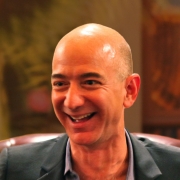









 Daniel Oberhaus, used under CC 4.0 License