• Link to LinkedIn
  • Link to Facebook
  • Link to Instagram
  • Link to Youtube
  • Link to X
SUBSCRIBE TO NEWSLETTER
Joel Kotkin
  • About
    • Events
  • Media
    • In the News
    • Videos
  • Books
  • Articles
    • Demographics
    • Urban Affairs
    • The Economy
    • Politics
    • Rural Policy
    • Reports
    • Religion
    • California
  • Podcast
  • Speaking
  • Contact
  • Click to open the search input field Click to open the search input field Search
  • Menu Menu
You are here: Home1 / Articles2 / The Economy

America’s Overdue to Unfriend Mark Zuckerberg

June 11, 2021/in Politics, The Economy

Many have understandably applauded Facebook’s decision to ban former President Donald Trump from the site for the next two years, but the ability of a company to decide who should be in the public square, which the social network has effectively become, raises troubling questions about the future of our tattered democracy.

The decision was announced by Nick Clegg, the former deputy prime minister of the United Kingdom who’s now the vice president of global affairs at the social network, but there’s no question that the final call here belonged to Facebook’s co-founder, chairman, CEO, and controlling stockholder.

Not long ago, Mark Zuckerberg was a kind of folk hero to many Americans, a nerd who made billions with an idea developed at a Harvard dorm. He was a firm believer in free speech as recently as 2019, even to the point of offending the progressive cognoscenti. All that has changed, along with the political currents.

His free speech views faded when they became a threat, rather than a boon, to his bottom line. Now, rather than being seen the way he wants to be, as an open-minded entrepreneur and even a potential presidential candidate, Zuckerberg finally stands exposed as a leading member of the new techno-aristocracy manipulating the world and shaping our society to fit their own world view, while getting ever richer in the process.

This ascendency offers little for most Americans, even as Americans have provided so much to Zuckerberg and his ilk as tech has become ever more concentrated and monopolistic, putting a lie to the heroic myth of “a guy and a garage.” Since 2019, Facebook, Apple, Amazon, Microsoft, and Google have added more than two and a half trillion dollars to their valuation, including record-breaking profits in 2020 as the pandemic shut down much of the in-person economy, while workers and consumers have faced stagnant incomes and purchasing power.

This is, as the left of center American Prospect put it, “predatory capitalism.”

This accrual of power relies on having influence in Washington. Quasi-monopolies like Facebook could never have grown into such behemoths if not for the willingness of regulators, in both parties, to let them buy potential competitors like Instagram, Oculus, and WhatsApp. Taking a proactive approach, Zuckerberg put several fingers on the scales to assure the defeat of the less controllable Trump by financing Election Day operations in many critical states through an obscure Chicago based front group, the Center for Tech and Civic Life, which used its Facebook windfall to fund election offices, and staffers, around the country.

Facebook itself, along with Twitter, also de-platformed the New York Post, America’s oldest newspaper, to keep information about Hunter Biden’s laptop from circulating. And both sites booted Trump himself, a stance that horrified those like German Chancellor Angela Merkel and Russian dissident Alexei Navalny who have lived under autocratic regimes.

Read the rest of this piece at Daily Beast.


Joel Kotkin is the author of The Coming of Neo-Feudalism: A Warning to the Global Middle Class. He is the Presidential Fellow in Urban Futures at Chapman University and Executive Director for Urban Reform Institute. Learn more at joelkotkin.com and follow him on Twitter @joelkotkin.

Homepage photo: Anthony Qunitano, via Flickr under CC 2.0 License.

https://joelkotkin.com/wp-content/uploads/2021/06/Mark_Zuckerberg_F8_2019_Keynote.jpg 675 1200 Joel Kotkin /wp-content/uploads/2017/01/jkotkin_logo.png Joel Kotkin2021-06-11 07:25:112021-06-09 16:32:33America’s Overdue to Unfriend Mark Zuckerberg

How Work Will Change Permanently After the Pandemic

June 9, 2021/in The Economy

Last spring, the COVID-19 pandemic caused perhaps the worst job losses since the Great Depression. The decrease in the labor force participation rate — from 63.3% to 61.3% — has been steeper than that seen in the Great Recession and is among the largest 12-month declines in the post-World War II era, according to the Pew Research Center and federal labor data.

Read more

https://joelkotkin.com/wp-content/uploads/2021/06/facebook-headquarters.jpg 675 1200 Joel Kotkin /wp-content/uploads/2017/01/jkotkin_logo.png Joel Kotkin2021-06-09 14:30:222021-06-16 15:04:34How Work Will Change Permanently After the Pandemic

Winners and Losers: The Global Economy After COVID

June 8, 2021/in Demographics, The Economy

The COVID-19 pandemic has transformed the world economy in ways that will be debated by pundits and future historians for decades to come. Yet, as hard as it is to predict a disrupted future accurately, the pandemic (not to mention its probable successors) looks likely to produce clear economic winners and losers. The top digital companies—Amazon, Apple, Tencent, Microsoft, Google, Facebook, Ant, Netflix, and Hulu—have thrived during quarantines and the ongoing dispersion of work. These are the most obvious winners in what leftist author Naomi Klein has called a “Screen New Deal” that seeks to create a “permanent and profitable no-touch future.” Since 2019, Facebook, Apple, Amazon, Microsoft, and Google have added over two-and-a-half trillion dollars to their combined valuation, and all enjoyed record breaking profits in 2020.

But it’s not just the tech oligarchs who have benefited from the pandemic disruption. Companies that keep the basic economy functioning—firms dealing in logistics, for example, or critical metals or food processing—have become, if anything, even more important. With the shipping supply chain disrupted due to the pandemic, logistics giant Maersk is set to increase its inland-based operation with the acquisition of the Swiss-based broker KGH Customs Services. The company reported its best quarter ever in the first quarter of 2021, launching a $5 billion share buyback scheme. And although the developing world has been hit hard by declines in tourism and investment, mining giants such as Glencore are investing billions to challenge China’s market dominance in rare earth minerals. The global market for cobalt is expected to double by 2025 and has launched a new “scramble for Africa,” which is also raising moral questions about whether or not the green oligarch’s love of the planet outweighs human rights abuses such as the practice of child labor in the Democratic Republic of Congo.

Even some high street businesses which have taken major hits are finding new niches. Many small businesses may never return to pre-COVID levels, as people have become used to the convenience of online purchases. Nevertheless, some are finding new uses for redundant malls, and have discovered new ways to reach more customers using social media and technology. Lower property prices are also opening up potential opportunities for entrepreneurs in pricey places such as Manhattan, San Francisco, or London. Pestilence re-shapes economies.

In his 2017 book The Fate of Rome: Climate, Disease, and the End of an Empire, historian Kyle Harper argues that plague, as well as climate change, undermined the Roman empire, creating conditions that boosted the barbarian warlords who would later become the Medieval aristocracy. The lethal plagues of the Middle Ages likewise disrupted the great Mongol empire, at the time the largest in history, and in conjunction with cooling temperatures, undermined the stability of the great Silk Road and ended the Pax Mongolica. This opened the door to the Age of Exploration and Europe’s maritime conquest of the world. Within Medieval Europe, the Black Death killed as much as 40 percent of the population, but also precipitated the rise of the Third Estate, and in some places raised wages for scarce labor. “People were fewer,” noted historian Barbara Tuchman, “but they ate better. The pandemic also led to greater emphasis on long-distance navigation.”

During the current crisis, disintermediation has been the primary driver of the post-pandemic economy. The novel coronavirus forced businesses to adapt quickly to new circumstances, and as with all economic crises, created winners and losers. The lockdowns accelerated the use of digital technology for work, retail, and entertainment. This has not only helped the big firms but also produced a whole crop of new startups, many of which address the shift to online work. The tech oligarchies now face competition from decentralized networks based on blockchain technology which is less vulnerable to domination by giant firms with algorithms that are designed to eliminate the incentive structures that lead to central node control and promote monopolistic behavior. Domains such as Lokinet, Ethereum, Odysee, and Urbit seek to give users ownership of their own data. Even Google’s near-monopoly of web browser supremacy is set to be challenged by data-privacy-conscious alternatives such as DuckDuckGo, which has seen a 62 percent growth in search results in 2020. Users are clearly becoming more conscious of privacy and data ownership.

Read the rest of this piece at Quillette.


Joel Kotkin is the author of The Coming of Neo-Feudalism: A Warning to the Global Middle Class. He is the Presidential Fellow in Urban Futures at Chapman University and Executive Director for Urban Reform Institute. Learn more at joelkotkin.com and follow him on Twitter @joelkotkin.

Hügo Krüger is a Structural Engineer with working experience in the Nuclear, Concrete and Oil and Gas Industry. He was born in Pretoria South Africa and moved to France in 2015. He holds a Bachelors Degree in Civil Engineering from the University of Pretoria and a Masters degree in Nuclear Structures from the École spéciale des travaux publics, du bâtiment et de l’industrie (ESTP Paris). He frequently contributes to the South African English blog Rational Standard and the Afrikaans Newspaper Rapport. He fluently speaks French, Germany, English and Afrikaans. His interests include politics, economics, public policy, history, languages, Krav Maga and Structural Engineering.

Homepage photo: Steve Jurvetson, via Flickr under CC 2.0 License.

https://joelkotkin.com/wp-content/uploads/2021/06/jeff-bezos_photo-by-jurvetson.jpg 675 1200 Joel Kotkin and Hügo Krüger /wp-content/uploads/2017/01/jkotkin_logo.png Joel Kotkin and Hügo Krüger2021-06-08 07:25:062021-06-06 12:38:02Winners and Losers: The Global Economy After COVID

A Middle Class Rebellion Against Progressives is Gaining Steam

June 5, 2021/in Politics, The Economy

A specter is haunting America, a great revolt that threatens to dwarf the noxious rebellion led by Trump. The echoes of a another potentially larger pushback can already be heard in progressive America. But it’s not towards socialism, as many suggest. It’s the opposite: a new middle-class rebellion against the excesses of the Left.

This new middle-class rebellion isn’t rejecting everything that progressives stand for; the Left’s critique of neo-liberal excess is resonating, as is the need for improved access to health care. But the current focus on “systemic racism,” coupled with a newfound and heavily enforced cultural conformism and the obsessive focus on a never-ending litany of impending “climate emergencies” are less likely to pass muster with most of the middle class, no matter how popular they are with the media, academics, and others in the progressive corner.

And this new middle-class rebellion is being bolstered by a wide-ranging intellectual rebellion by traditional liberals against the Left’s dogmatism and intolerance. Indeed, what we’re about to see has the potential to reprise the great shift among old liberals that had them embracing Reagan in reaction to the Left’s excesses of that generation.

In a way, this should not be surprising. After all, the progressive base is limited: According to a survey conducted by the non-partisan group More in Common, progressives constitute barely eight percent of the electorate. The report also found that fully 80 percent of all Americans believe that “political correctness is a problem,” including large majorities of millennials and racial minorities.

Party line journalists may see President Biden as the new champion of the middle class, but every time he adopts central tenets of the new Left, he undermines his pitch. And this happens not infrequently: The Biden Administration has adopted elements of the “anti-racist” agenda, for example, by explicitly favoring Black farmers for subsidies, rather than focusing on all farmers in need. Race issues may be popular on college campuses and in the human relations departments of giant corporations like Lockheed and Amazon, but a recent Yale study found that language based on inclusivity around class was far more popular than one focused largely on race, even with progressive voters.

This is not the message coming out of the Biden administration, which has put a premium on diversity hiring and “equity,” despite the fact that racial quotas, in hiring or in college admissions, are unpopular with three out of four Americans, including African-Americans and Hispanics; 65% of Hispanics, 62% of black Americans and 58% of Asians oppose affirmative action in college admissions.

Read the rest of this piece at Newsweek.


Joel Kotkin is the author of The Coming of Neo-Feudalism: A Warning to the Global Middle Class. He is the Presidential Fellow in Urban Futures at Chapman University and Executive Director for Urban Reform Institute. Learn more at joelkotkin.com and follow him on Twitter @joelkotkin.

Homepage photo credit: Hollywata via Flickr under CC 2.0 License

https://joelkotkin.com/wp-content/uploads/2021/06/middle-class-protest.jpg 675 1200 Joel Kotkin /wp-content/uploads/2017/01/jkotkin_logo.png Joel Kotkin2021-06-05 07:25:472021-06-03 16:16:09A Middle Class Rebellion Against Progressives is Gaining Steam

Joe Biden’s Imaginary America

June 2, 2021/in Politics, The Economy

After two painful recessions and ever greater national discord, there is considerable support for a new beginning, even if it takes massive federal spending. The question we must ask now is what kind of spending makes sense given the character of the country, its geography, and its economic challenges. America remains a vast and diverse place, and decisions that make sense for one locale do not necessarily make any sense in others. A dispersed country needs dispersed decision-making, not edicts issued from on high by the D.C. nomenklatura.

Read more

https://joelkotkin.com/wp-content/uploads/2021/05/The-Grove_St-Louis.jpg 675 1200 Joel Kotkin and Wendell Cox /wp-content/uploads/2017/01/jkotkin_logo.png Joel Kotkin and Wendell Cox2021-06-02 07:01:572021-05-30 08:03:38Joe Biden’s Imaginary America

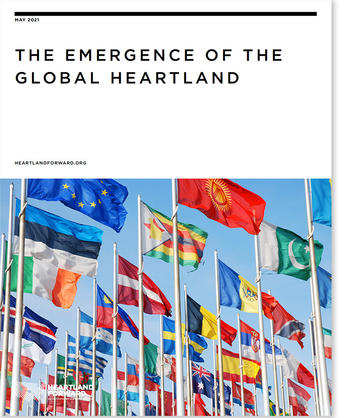
The Emergence of the Global Heartland

May 28, 2021/in Demographics, Reports, The Economy

Report: Emergence of the Global Heartland

A major shift in the demographic evolution of America is occurring, largely out of sight in the national media, but profoundly affecting communities throughout the Heartland.

The 20 state region, which extends between the Appalachians and the Rockies, has for generations been largely unaffected by the massive movement of people from abroad that has so dramatically transformed the great metropolitan regions of coastal America.

In the national media, the Heartland represented a region, as the New York Times described it, as ’not far from forsaken,’ a depopulating place where the American dream has come and gone. Others have seen the region as an unreconstructed mecca for intolerance, one that had few immigrants and poor race relations and seems destined to suffer for it. As one professor at Vanderbilt suggested recently, the region was “dying from whiteness” and that its “politics of racial resentment is killing America’s heartland.”

Perhaps it is time to change that narrative. Over the past decade, the Heartland’s share of the foreign-born population has risen from 23.5 percent in 2010 to 31.1 percent in 2019. This shift can be seen in many Heartland communities, some such as Louisville, Columbus and Nashville Read more

https://joelkotkin.com/wp-content/uploads/2021/05/emergence-of-the-global-heartland.jpg 675 1200 Joel Kotkin /wp-content/uploads/2017/01/jkotkin_logo.png Joel Kotkin2021-05-28 07:25:262024-01-17 17:33:07The Emergence of the Global Heartland

The Rise of Corporate–State Tyranny

May 21, 2021/in Politics, The Economy

In explaining his shift away from Maoist economics, Deng Xiao Ping, chairman of the Chinese Communist Party, described his market-oriented changes as “socialism with Chinese characteristics.” Today, American businesses, as well as the media and academic establishments that serve them, increasingly embrace what can best be described as “Chinese capitalism with American characteristics.”

Read more

https://joelkotkin.com/wp-content/uploads/2021/05/SanFrancisco.jpg 675 1200 Joel Kotkin /wp-content/uploads/2017/01/jkotkin_logo.png Joel Kotkin2021-05-21 07:25:332021-05-19 10:49:01The Rise of Corporate–State Tyranny

How Los Angeles Descended Into Neo-Feudalism and How to Fix It

May 17, 2021/in California, The Economy, Urban Affairs

For most of the last century, Los Angeles loomed as the next great American city, a burgeoning paradise riding the shift of world power west. It seemed posed to leave New York and London in the dust, the engines of growth inexorable. There was the city’s dominance of the entertainment and aerospace industries, which incited migration from both the rest of the country and abroad, and all this promise was symbolized by a spread of suburban single-family houses that seemed to embody the ideal American dreamscape.

Read more

https://joelkotkin.com/wp-content/uploads/2021/05/Arroyo_Seco_Homeless_Encampment.jpg 675 1200 Joel Kotkin /wp-content/uploads/2017/01/jkotkin_logo.png Joel Kotkin2021-05-17 07:25:192021-05-16 10:34:17How Los Angeles Descended Into Neo-Feudalism and How to Fix It

America’s Post-Pandemic Geography

May 10, 2021/in Demographics, Rural Policy, The Economy, Urban Affairs

Even as vaccination increases across the United States and an end to the tragedy of the Covid-19 pandemic seems in sight, the economic, fiscal, political, and geographic fallout from the virus cannot be overstated: a massive public health crisis that left more than half a million Americans dead, an economic catastrophe that caused record unemployment and small-business closures, and a seismic political event that surely helped tip the presidential election. The pandemic will pass, and the economy will revive, as it is already doing. But in geographic terms, today’s Covid-precipitated crises may well prove to be the most transformative event that America has experienced since the great migration to the suburbs after World War II. After hitting record lows, mobility is up as a result of the pandemic. Between 14 million and 23 million Americans say that they are likely to move as a result of their ability to work remotely, according to research by economist Adam Ozimek. These geographic shifts are even more critical because they point in many directions and represent less a fundamental break with the past and more an acceleration of changes already under way in how we live and work.

America’s economic geography has long been shaped by the interplay of pull and push forces. On the one hand, centrifugal forces pull some people out of cities: families seek more affordable space, backyards, and access to better schools. With the wider scope of choice that remote work affords, some are casting their nets wider and moving farther afield, not just to suburbs but also to other cities, smaller metro areas, and even rural communities. On the other hand, centripetal forces remain that push other groups and activities toward urban centers. College-educated young people in their mid-twenties to mid-thirties have accounted for roughly half the revival of close-in urban neighborhoods (those located near a metro area’s central business district) over the past decade, according to research by Joe Cortright of City Observatory. They are likely to do so, perhaps even more profoundly, in the decade ahead, propelled in part by falling urban real-estate prices. Superstar cities may regain some of their former creativity as artists, musicians, writers, and the like, many uprooted by the pandemic, can once again afford to live in them.

It’s hard to predict how this will play out in the long run, but the pandemic has placed a new burden on all communities. Big cities, Sunbelt boomtowns, small urban regions, and rural areas alike must develop effective strategies for recovery in a post-pandemic world.

The pandemic hit superstar cities like New York and London first and hardest. With their central business districts turned into ghost towns, big cities have suffered a blow from which they will need years to rebound. New York’s midtown and Wall Street still remain noticeably empty. Broadway theaters are still shuttered. San Francisco’s office district, home to many leading tech companies, stands similarly empty.

Dense cities suffered the most total fatalities largely because, as globally connected places, they were hit by the virus in its first, deadliest phase. Time and research have shown, however, that they are not uniquely vulnerable. By the fall of 2020, the second wave of infections and death had spread out across the country to smaller states and rural communities. While large urban centers and big states still have the highest overall death tolls, more sparsely populated places overtook them on a per-capita basis, with North Dakota logging the nation’s highest Covid death rate in the fall. The danger lies not in density per se, but in overcrowding: the number of people per square foot, as opposed to square mile. (See “Problem: Overcrowding,” New York City: Reborn, 2021.) A kind of “exposure density” thus seems key to the spread of the virus.

Yet superstar cities are not about to disintegrate. Cities are more resilient than in the past. The swift distribution of vaccines makes urban comebacks more likely, and far more rapid, than those of ancient cities rising after eruptions of the plague. London recovered from cholera, and New York added 2 million people in the wake of the Spanish flu. Berlin survived Hitler, World War II, and a half-century of partition. New York roared back after 9/11. Large global cities are incredibly resilient places. (See “The Enduring City,” New York City: Reborn, 2021.)

But part of the exodus from New York and San Francisco is rooted in factors that will outlast the virus and that were already in play earlier. Both cities lost people before the pandemic, largely because of their increasing unaffordability. The rate of growth in America’s biggest and most expensive cities began to decline as early as 2015. The pandemic has worsened the new urban crisis of rampant gentrification, high living costs, and class and racial division—all sharply dramatized amid the wave of protests and riots in the summer of 2020.

Read the rest of this piece at City Journal.


Richard Florida is a professor at the University of Toronto and a senior fellow at Heartland Forward. Joel Kotkin is the author of The Coming of Neo-Feudalism: A Warning to the Global Middle Class. He is the Presidential Fellow in Urban Futures at Chapman University, a senior fellow at Heartland Forward, and Executive Director for Urban Reform Institute. Learn more at joelkotkin.com and follow him on Twitter @joelkotkin.

Photo: BlueRidgeKitties via Flickr, under CC 2.0 License.

https://joelkotkin.com/wp-content/uploads/2021/05/charlotte-nc_h.jpg 675 1200 Joel Kotkin and Richard Florida /wp-content/uploads/2017/01/jkotkin_logo.png Joel Kotkin and Richard Florida2021-05-10 09:40:362021-05-10 09:40:36America’s Post-Pandemic Geography

Feudal Future Podcast — Biden’s Tax Plan

May 10, 2021/in Podcast, Politics, The Economy

On this episode of Feudal Future, hosts Joel Kotkin and Marshall Toplansky are joined by Hank Adler, Associate Professor of Accounting for Chapman University, and Steven Malanga, City Journal’s senior editor, to discuss Biden’s new tax plan.

Read more
https://joelkotkin.com/wp-content/uploads/2021/05/feudal-future-podcast-biden-tax-plan.jpg 675 1200 Joel Kotkin and Marshall Toplansky /wp-content/uploads/2017/01/jkotkin_logo.png Joel Kotkin and Marshall Toplansky2021-05-10 08:28:592021-05-10 08:28:59Feudal Future Podcast — Biden’s Tax Plan
Page 20 of 66«‹1819202122›»
Search Search

Subscribe to Feed

Subscribe to RSS   follow us in feedly

Recent Articles

  • I’d Like to Believe California Can Be Saved from the Left
  • The Strange Afterlife of Fascism
  • Steve Hilton’s Rise Won’t Kill California Progressivism
  • The Anti-AI Backlash is Building Against Tech Oligarchs Playing God
  • SpaceX IPO Will Bolster American Tech Supremacy

Joel has spoken at many leading universities, business groups, government organizations and more.

INVITE JOEL TO SPEAK

STAY CONNECTED

Join the conversation at Twitter
or Facebook. Visit our YouTube
channel or subscribe to RSS
to read our latest articles.

      Subscribe to RSS  follow us in feedly

Recent Articles

  • California has been a one-party state for awhile; can that change?
    I’d Like to Believe California Can Be Saved from the LeftJune 8, 2026 - 11:45 am
  • The Strange Afterlife of FascismJune 5, 2026 - 11:40 am
  • Steve Hilton speaking at an event for conservative officials
    Steve Hilton’s Rise Won’t Kill California ProgressivismJune 3, 2026 - 11:40 am
  • The Anti-AI Backlash is Building Against Tech Oligarchs Playing GodJune 1, 2026 - 11:40 am

Topics

  • Books
  • California
  • Demographics
  • In the News
  • Podcast
  • Politics
  • Religion
  • Reports
  • Rural Policy
  • The Economy
  • Urban Affairs
© Copyright – Joel Kotkin | Site Admin
  • About
  • Media
  • Books
  • Articles
  • Podcast
  • Speaking
  • Contact
Scroll to top Scroll to top Scroll to top