Class Homicide
There’s much talk today, from left and right, about threats to democracy, yet little focus on the social dynamic critical to its survival. In this respect, we may see the current, and troubling, escalation of violent political rhetoric, and even political violence, not so much as the cause of polarization but the result of changing class dynamics, most notably the increasingly perilous state of the yeoman middle class.
The United States, and much of the high-income world, is going through a revision of class relations resonant with gilded age, or even feudal models. A recent British parliamentary study projects that by 2030, the top one percent will expand their share to two thirds of the world’s wealth, with the biggest gains overwhelmingly concentrated at the top one percent of the top one percent—the top 0.01 percent. Similarly, in this country, since the mid-1980s, the share of national wealth held by those below the top 10 percent has fallen by 12 percentage points, the same proportion that the top 0.1 percent gained.As one conservative economist put it succinctly in 2018, “The economic legacy of the last decade is excessive corporate consolidation, a massive transfer of wealth to the top 1 percent from the middle class.”
Hierarchy triumphs over merit and even luck
In the process, the aspirational character long essential to American society is being transformed. According to one study, the chances of middle-class earners moving up to the top rungs of the income ladder has declined by approximately 20 percent since the early 1980s. Data from the Census Bureau show that the share of national income going to the middle 60 percent of households has fallen to a record low.
In the economy, hierarchy is rapidly replacing opportunity. Banking and finance, treated amiably by Washington during the Financial Crisis, have become increasingly concentrated while many smaller regional institutions have either been acquired or driven out of business. Growing corporate concentration has now seeped into the once dynamic tech economy in both the U.S. and Europe. In Silicon Valley now, the renowned garage culture has morphed into a Gargantua of giant firms with market power unprecedented in modern times, controlling in some cases 80 to 90 percent of key tech markets.
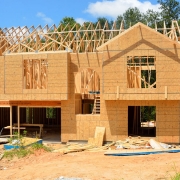
Similarly, property ownership has become more concentrated; we see declining homeownership, particularly among the young, notably in the United States, Canada, and Australia. One analyst predicted that soon most middle class people will be “priced out” of ownership in a “rentership society” where Wall Street firms profit by renting homes, furniture, and other necessities.
Own nothing and eat it
Increasingly, property ownership now increasingly depends on inheritance; the offspring of property-owning parents are far better situated to own a house eventually (often with parental help) and enter what one writer calls “the funnel of privilege.” In America, millennials are three times as likely as boomers to count on inheritance for their retirement. Among the youngest cohort, those ages 18 to 22, over 60 percent see inheritance as their primary source of sustenance as they age.
The assault on middle class mobility strikes at the heart of democratic governance. Throughout history, democracy, the definition of which clearly changes over the millennia, has rested on a broad base of small property owners—merchants, artisans, skilled laborers, small farmers, and professionals. The earliest democracies in Athens and Rome rested on an assertive property-owning middle class. Aristotle also warned about the dangers of an oligarchy that would control both the economy and the state; in fact, an ever-greater consolidation of wealth played a role in undermining Greek democracy. Much the same process took place in the once citizen-led Roman Republic. By the end of the Republic, over 75 percent of all property was owned by roughly 3& percent of the population, while over four-fifths owned no property.
Read the rest of this piece at American Mind.
Joel Kotkin is the author of The Coming of Neo-Feudalism: A Warning to the Global Middle Class. He is the Roger Hobbs Presidential Fellow in Urban Futures at Chapman University and Executive Director for Urban Reform Institute. Learn more at joelkotkin.com and follow him on Twitter @joelkotkin.
Photo: Flickr under CC 2.0 License.
 Paul Sableman, used under CC 2.0 License