Why God Came Back
Nearly 60 years ago, Time magazine, then an important publication, posed a discomfiting question on its cover: “Is God Dead?” Yet today, a spiritual hunger grips America, with roughly two-thirds of religiously unaffiliated Americans still believing in God or a universal spirit, according to Pew. Overall, young people are drawing closer to a higher power, and new research reports that most Gen-Z teens are more interested in learning more about Jesus, often using the internet to find new commitments.
There is even some sign of revival in decidedly secular Europe, with 45% more people being baptized in historically anti-clerical France compared to last year. And, notes The Spectator, there’s a “boom biblique”: a rapid rise in sales of the Bible. More broadly, religious bookstores report a 20% percent increase in purchases since 2024. In Britain, of course, there is the “quiet revival,” with the church-attending share of the population rising to nearly 6 million in 2025, up from 3.7 million in 2018, with much of the energy seen among young men.
In modern sociology, conventional wisdom holds that religious people are generally less curious, less ambitious, and less intelligent than their nonbelieving peers. But this view is out of tune with current realities. On the contrary, a deep dive into the data shows that, over the last 15 years, religiously engaged people have become more likely to be well-educated, while atheists are less so. In the United States, religious groups outperform atheists and agnostics.
Overall, religious enthusiasm is most concentrated among middle-income professionals. An analysis of the 2022-2023 Cooperative Election Study, surveying nearly 85,000 Americans, found a positive correlation between education and weekly religious attendance. The rate of attendance rises from 23% among high school graduates to 30% for those with graduate degrees. This trend is supported by the sociologist Philip Schwadel’s research, which found that each additional year of education increases an American’s likelihood of attending religious services by 15%.
At the same time, the nature of worshippers has changed, and taken on increasingly conservative character. This has much to do with the rise of Gen Z, notes religious commentator Aaron Renn. Today’s young believers have arrived at faith amid a decidedly hostile environment for religion. They have, moreover, embraced political positions on race, immigration, and transgenderism that are vastly different from those held by older liberal Catholics as well as mainline Protestants.
Indeed, progressive ideology has proved catastrophic for houses of worship that embrace it. In 2019, more Protestant churches closed than opened in the United States, as mainstream Protestant denominations lost 5 million members in the past decade. Once dominant mainline Protestant churches now count barely 9% of Americans in their flocks, down from a peak of 50%. Progressive-dominated sects like the Presbyterians, the Episcopalians, and the United Church of Christ are experiencing what one analyst described as “a bloodbath,” with membership down at least 30% since the Nineties.
In Canada, the once-dominant Anglicans have lost roughly three-quarters of their worshippers and could go extinct by 2040, according to some church leaders. Even in its ancestral home, the Church of England, fashionably liberal and dismissive of many of the concerns of its congregants about such problems as Islamic militancy or grooming gangs, has been in secular decline and may be surpassed by Islam within a decade. Liberal Catholicism is similarly graying and out of touch.
Read the rest of this piece at: UnHerd.
Joel Kotkin is the author of The Coming of Neo-Feudalism: A Warning to the Global Middle Class. He is the Roger Hobbs Presidential Fellow in Urban Futures at Chapman University and and directs the Center for Demographics and Policy there. He is Senior Research Fellow at the Civitas Institute at the University of Texas in Austin. Learn more at joelkotkin.com and follow him on Twitter @joelkotkin.
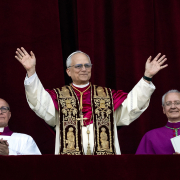
Photo: Israel Torres, via Pexels.