
The Revenge of the Material Economy
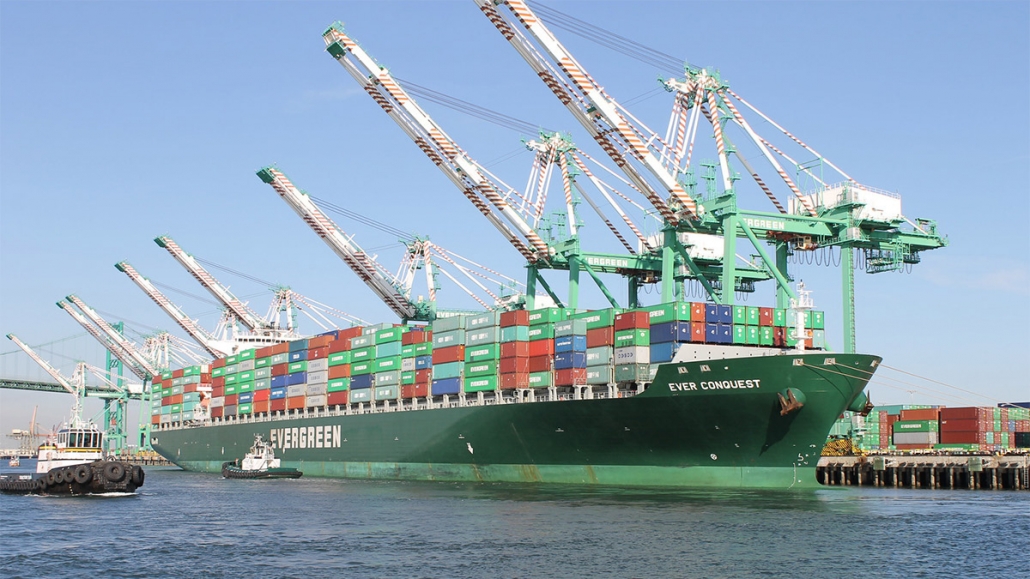
America’s narrow escape last week from a major rail-worker strike brought home an important truth: people who make and ship real things – let’s call them material workers – now hold the whip hand over our supposedly ‘post-industrial’ economy. Firms trading non-tangibles – currency, bits and bots – may still hoard the most cash. But when it comes to eating, staying warm and, for many, making a living, the material economy is what matters most.
Yet the material economy has been hugely constrained in recent years – and deliberately so. This has become all too apparent since the war in Ukraine. Back in the pandemic era, thanks to the recurring lockdowns, the biggest winners were the tech giants and their supporters in Wall Street. Now Silicon Valley, suffering from the worst IPO market in 20 years, resembles something akin to a psychiatric ward, while Goldman Sachs is contemplating mass layoffs. Today, many green-energy projects and ESG funds (that is, funds rated as environmentally sustainable) are languishing, despite benefitting from massive government subsidies and relentless public-relations campaigns in recent years. Meanwhile, oil companies, once demonised by climate-obsessed politicians and activists, are now enjoying bumper profits, as are some commodity firms.
The conflict between the material economy and the economy based in ephemera – such as the creative industries, tech and financial services – is likely to define the coming political conflicts both within countries and between them. The laptop elites, led by Silicon Valley, the City of London and Wall Street, generally favour constraining producers of fuel, food and manufactured goods. In contrast, the masses, who produce and transport those goods, are now starting to realise that they still have the power to demand better futures for themselves and their families. Like railway workers, they can threaten to shut things down and win much higher pay.
The prospect of union organisation is spreading even to companies like Amazon and Starbucks. But there could be a backlash to this from employers. If wages rise too quickly, we could end up with a lot of union members without jobs, as the economy weakens and automation, spurred by rising labour costs, kicks in. Already, as California plans to force huge raises for fast-food workers, some fast-food giants are now backing ventures that aim to replace workers with robots.
The biggest threat to the material economy is likely to be the green agenda. Even before Russia’s invasion of Ukraine and the global energy crisis, problems with often unreliable and expensive renewable energy were accelerating the deindustrialisation of the UK and much of the EU – including Germany, which had long been an industrial powerhouse. Energy rationing could be on the horizon in Europe this winter. Globally, energy-price inflation threatens to drive far more bankruptcies than the 2008 financial crisis. And food inflation, which in some countries has been driven by green agricultural policies, has led the percentage of people worldwide experiencing food insecurity to double since 2019.
Good material jobs cannot easily co-exist with Net Zero policies, which are aimed at wiping out fossil fuels in the near term. Trillions of dollars have been spent on global power generated by green energy over the past 20 years, but the percentage of fossil fuels has barely declined. The bulk of greenhouse-gas reductions in recent years has come from switching from coal to natural gas. Yet the negative consequences of trying to eliminate fossil fuels and nuclear power have been profound, both for companies and consumers. Thanks to Germany’s much vaunted ‘energy transition’, German consumers had to endure the highest electricity prices in the world, even before Russia’s invasion of Ukraine. In uber-green California, residents pay up to 80 per cent above the US national average for electricity.
The elites’ turn against the material economy has been going on for at least half a century. It surfaced prominently in the 1972 book, The Limits to Growth, which argued that natural resources were diminishing rapidly and so the world needed to transition to a less materially based economy with slower growth. This mentality has persisted and even grown, even though many green assertions dating back to that period – including warnings of mass starvation in much of the world – turned out to be exaggerated or plain wrong.
Read the rest of this piece at Spiked.
Joel Kotkin is the author of The Coming of Neo-Feudalism: A Warning to the Global Middle Class. He is the Roger Hobbs Presidential Fellow in Urban Futures at Chapman University and Executive Director for Urban Reform Institute. Learn more at joelkotkin.com and follow him on Twitter @joelkotkin.
Photo: Corey Seeman via Flickr under CC 2.0 License.
 Gage Skidmore, under CC 2.0 License
 BBC World Service, used under CC 2.0 License






 Ted Eytan, used under CC 4.0 License