• Link to LinkedIn
  • Link to Facebook
  • Link to Instagram
  • Link to Youtube
  • Link to X
SUBSCRIBE TO NEWSLETTER
Joel Kotkin
  • About
    • Events
  • Media
    • In the News
    • Videos
  • Books
  • Articles
    • Demographics
    • Urban Affairs
    • The Economy
    • Politics
    • Rural Policy
    • Reports
    • Religion
    • California
  • Podcast
  • Speaking
  • Contact
  • Click to open the search input field Click to open the search input field Search
  • Menu Menu
You are here: Home1 / Articles2 / Demographics3 / Reconsidering the City
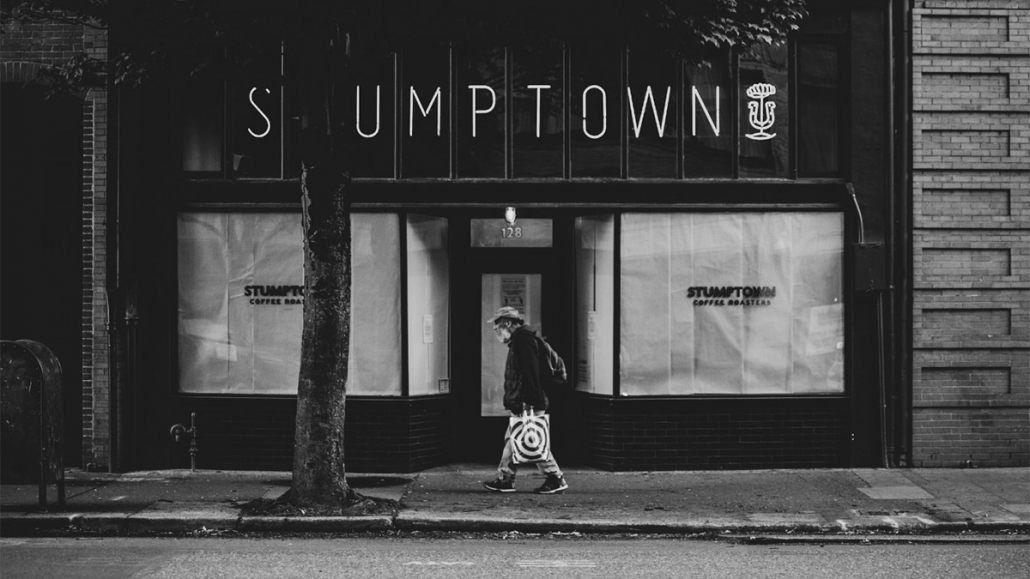
Empty storefront in urban area of Portland, Oregon

Reconsidering the City

June 13, 2022/in Demographics, Urban Affairs

Over five millennia, urban centers have been drivers of civilization and progress, and have adapted in ways that have changed their form and function but assured their survival. Today, they are about to undergo another critical transition that will determine their relative position in the decades ahead.

Cites began as small settlements that became bigger and denser, before becoming less dense again. Walking was replaced by a transit-based culture, which was replaced in its turn by an auto-dependent culture, which is now set to be usurped by a new pattern of life based on digital commuting. Cities must now adjust to a new paradigm in the high-income West, and also in the developing world where the vast majority of the world’s largest megacities are located. In countries like India and China, the flow of people to cities appears to have slowed as urban life loses some of its appeal. What were once thought of as places of opportunity are now more often linked to deteriorating health conditions and shorter life spans.

In this emerging new reality, urban centers must find their niche. People’s choice of location is more fluid than ever before, and the home has become a primary business location. People will come to the city, not out of economic necessity nor government fiat, but because that is where they choose to settle.

The Transactional City

The new urban paradigm represents the third major urban transformation in the past century. In 1900, cities were primarily centers of manufacturing and trade in physical goods. But by the 1960s, places like New York, Chicago, San Francisco, and Tokyo jettisoned the factory-centered economy and evolved into what Jean Gottmann called the “transactional city.” This was dominated by elite business services operating out of high-rise towers—the “commanding heights” of the world economy, beneath which all others were relegated to subordinate roles.

This shift was hugely disruptive. New York, which had a million manufacturing jobs in 1950, now has less than 100,000. Los Angeles has seen industrial employment drop from over a million in 1990 to fewer than 500,000 now. Much of the old urban population moved as industrial and white-collar jobs headed to the periphery. Indeed, despite all the talk of “back to the city,” suburbs account for about 90 percent of all US metropolitan growth since 2010, a net gain of two million domestic migrants, while the urban core counties lost 2.7 million.

This is not just an American phenomenon. Since 1921, Paris’s city center has lost over 700,000 residents, while the suburbs have gained nearly eight million, according to data from the French census bureau INSEE and the United Nations. After peaking at 4.5 million residents in 1901, inner London lost 2.03 million people over the next 90 years while outer London added 2.2 million. From 1990 to 2020, the central city of Seoul lost a million residents while the suburbs (Gyeonggi and Incheon) added 8.5 million. Cities in developing countries, notes NYU’s Solly Angel, have also followed this dispersive pattern.

Read the rest of this piece at Quillette.


Joel Kotkin is the author of The Coming of Neo-Feudalism: A Warning to the Global Middle Class. He is the Roger Hobbs Presidential Fellow in Urban Futures at Chapman University and Executive Director for Urban Reform Institute. Learn more at joelkotkin.com and follow him on Twitter @joelkotkin.

Photo: Sean Benesh via Unsplash.
Share this entry
  • Share on Facebook
  • Share on X
  • Share on LinkedIn
  • Share on Tumblr
  • Share on Reddit
  • Share by Mail
https://joelkotkin.com/wp-content/uploads/2022/06/Stumptown_by_Sean-Benesh.jpg 675 1200 Joel Kotkin /wp-content/uploads/2017/01/jkotkin_logo.png Joel Kotkin2022-06-13 07:12:122022-06-10 10:21:57Reconsidering the City
You might also like
Biggest cities emptying out as people head to suburbs and smaller citiesSteve Guttman, used under CC 2.0 License The Biggest Cities Are Past Their Prime
Fred Siegel's legacy is a love of and a booster of cities, particularly his adopted hometown of Brooklyn. Fred Siegel’s Legacy
Housing affordability stands at the lowest level ever recorded. Locked Out of the Dream: Regulation Making Homes Unaffordable Around the World
Victorian houses in San Francisco Why More Americans Should Leave Home and Move to Other States
Lady Liberty under dramatic skies, with a face mask How America Abandoned the World—and Our Own Inner Cities
Special Episode: Restoring the California Dream Feudal Future Podcast – Restoring the California Dream
Search Search

Subscribe to Feed

Subscribe to RSS   follow us in feedly

Recent Articles

  • The American Revolution at 250
  • The Myth of Europe’s Fascist Revival
  • SpaceX Spinoffs Launch El Segundo into Economic Orbit
  • Left-wing Civil War Threatens LA’s Future
  • I’d Like to Believe California Can Be Saved from the Left

Joel has spoken at many leading universities, business groups, government organizations and more.

INVITE JOEL TO SPEAK

STAY CONNECTED

Join the conversation at Twitter
or Facebook. Visit our YouTube
channel or subscribe to RSS
to read our latest articles.

      Subscribe to RSS  follow us in feedly

Recent Articles

  • Painting of the signing of the Declaration of Independence, by John Trumbull, 1819
    The American Revolution at 250June 22, 2026 - 11:40 am
  • Official portrait of Prime Minister Giorgia Meloni of Italy, 2023
    The Myth of Europe’s Fascist RevivalJune 19, 2026 - 11:45 am
  • SpaceX spinoffs are contributing economic benefits to the El Segundo area.
    SpaceX Spinoffs Launch El Segundo into Economic OrbitJune 17, 2026 - 11:45 am
  • Nithya Raman's come-from-behind primary victory sets up a conflict between LA's establishment progressives and the Dems left-wing.
    Left-wing Civil War Threatens LA’s FutureJune 15, 2026 - 11:45 am

Topics

  • Books
  • California
  • Demographics
  • In the News
  • Podcast
  • Politics
  • Religion
  • Reports
  • Rural Policy
  • The Economy
  • Urban Affairs
© Copyright – Joel Kotkin | Site Admin
  • About
  • Media
  • Books
  • Articles
  • Podcast
  • Speaking
  • Contact
Link to: Green Rope-a-Dope: China Watches as America Greens Link to: Green Rope-a-Dope: China Watches as America Greens Green Rope-a-Dope: China Watches as America GreensAmerica accelerates renewable energy while China slows its own GHG reduction Link to: Forget College. Skilled Trades are the Future of the U.S. Economy Link to: Forget College. Skilled Trades are the Future of the U.S. Economy Skilled trades important to the U.S. EconomyForget College. Skilled Trades are the Future of the U.S. Economy
Scroll to top Scroll to top Scroll to top