
Upward and Outward: America on the Move
These are times, to paraphrase Thomas Paine, that try the souls of American optimists. A strain of insane ideologies, from QAnon to critical race theory, is running through our societies like a virus, infecting everything from political life and media to the schoolroom. Unable to unite even in the face of COVID-19, the country seems to be losing the post-pandemic struggle with China while American society becomes ever more feudalized into separate, and permanently unequal, classes.
Yet underneath the detritus of the age, a more hopeful future could be emerging. It will not be easy to get there and will evolve largely at the personal and local level outside the imbecilic national political culture. America’s recovery won’t come from our failed institutions but from our willingness to change conditions, on our own, when we no longer like them.
This recovery starts with a demonstrated ability to absorb and engage an ever more diverse population, including in our vast interior and suburban periphery. Our economic salvation lies with the creation of new businesses, from street-level retail to the entrepreneurial race into space. And the evidence so far is promising: Last year, after years of decline, new business formations rose to 4.4 million applications, compared to roughly 3.5 million in 2019. Self-employment, pummeled at first by the pandemic, has recovered more rapidly than conventional salaried jobs as more Americans reinvent themselves as entrepreneurs.
And supporting this growth is the bounty of our land itself. Providence has bequeathed us the most fertile, geographically diverse, resource-rich nation on Earth, with the second-largest expanse of arable land behind India, which has three times as many people to feed and far less efficient agriculture. We have land to accommodate people’s housing dreams and not pack them into ever more crowded cities, as other countries are forced to do.
These three key factors — diversity, entrepreneurship, and resources — suggest that, despite the challenges we face, the optimists are right in betting on a bright future for America.
*****
Sadly, the current presidential administration seems inured to these realities and ignores much of our country’s inherent strength. Biden’s approach to urban transit shows how his administration has misunderstood or overlooked the movement of diverse groups of Americans currently taking place around the country.
For example, Biden wants to spend far more on trains and high-speed rail — $165 billion for public transit against only $115 billion to fix and modernize roads and bridges — despite the fact that public transit accounted for less than 2 percent of all urban travel before COVID.
Biden’s Transportation Secretary Pete Buttigieg clearly wants to get Americans out of their cars and into trains and buses. He even claims that highways, like much else in pre-Biden America, are inherently racist. Yet public transit is not desirable or feasible for the vast majority of Americans of all races in most of the country. Urban centers like New York, Chicago, Philadelphia, San Francisco, Boston, and Washington accommodate nearly 60 percent of public transit use but only about 6 percent of the country’s jobs. Attempts to get people out of their cars have been a failure virtually everywhere else. Looking at twenty-three completed rail systems over the past decade demonstrates no great tendency towards transit. Overall, where the new systems have opened, the percentage of commuters driving alone has increased.
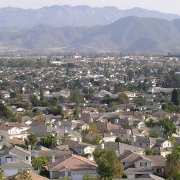
And critically, the dense urban model, with a job-rich core surrounded by feeder communities, is unraveling. Since 2010, over 90 percent of metropolitan growth has been in suburbs and exurbs, a trend that has been further accelerated by COVID. Many have adapted to new hybrid work models, with remote work being done not only from homes but also in dispersed offices and coffee shops. Stanford economist Nicholas Bloom suggests at least 20 percent of the workforce will work remotely even after the pandemic ends, up from 5.7 percent in 2019.
Some, like J.P. Morgan’s Jamie Dimon, will try to dragoon more employees into returning to the office, but they will face widespread resistance, according to human relations managers. In a recent survey of over five thousand employed adults, four in ten American workers expected some level of remote work flexibility post-pandemic. For many millennials, the hybrid and dispersed model, including suburban satellite offices, addresses issues like enhanced “life-work balance,” something generally held critical to millennials, and particularly to women with children trying to get back into the labor force as schools reopen, according to a Conference Board survey.
So jobs seem destined to emigrate from downtowns. It’s just a matter of how many and how far, as people find new opportunities elsewhere. Between September 2019 and September 2020, according to the firm American Communities and based on federal data, big cities lost nearly 10 percent of their jobs, followed by their close-in suburbs, while rural areas lost 6 percent and exurbs less than 5 percent.
Read the rest of this piece at The American Spectator.
Joel Kotkin is the author of The Coming of Neo-Feudalism: A Warning to the Global Middle Class. He is the Presidential Fellow in Urban Futures at Chapman University and Executive Director for Urban Reform Institute. Learn more at joelkotkin.com and follow him on Twitter @joelkotkin.
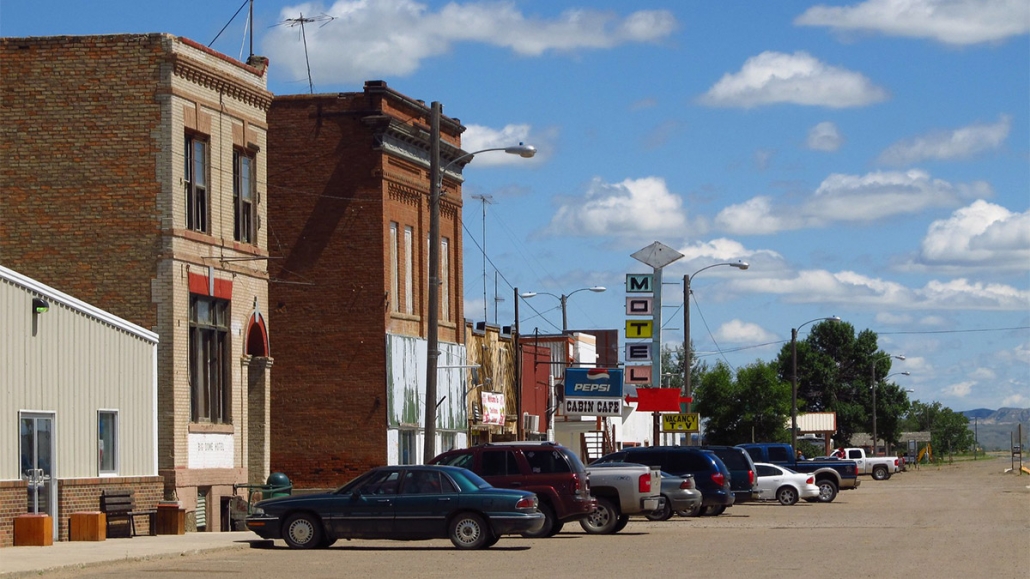
Homepage photo: Jasperdo via Flickr under CC 2.0 License.








 Marco Verch, used under CC 2.0 License
 Beatrice Murch, under CC 2.0 License