How California is Failing Its Latino Population
Few states so self-righteously proclaim their commitment to helping minorities like California does. Gov. Gavin Newsom rarely misses an opportunity to assert his solidarity with people of color, proclaiming in 2022 that “our incredible diversity is the foundation for our state’s strength, growth and success — and that confronting inequality is not just a moral imperative, but an economic one.”
Nice words, but on the things that matter — affordable housing, good jobs, and decent education — the current California regime has been a disaster for minorities. In a new study I did with attorney Jennifer Hernandez, released by the University of Texas’ Civitas Institute, we found that in most critical areas, African Americans and Latinos do worse here in California than in most of the country.
To be sure, some minorities have benefited from such programs as diversity, equity and inclusion to get into elite colleges and universities. But this has not stopped the rise of the state’s poverty rate, which increased to 18.9% in 2023, well above 11.0% in 2021, according to new Census data. Latinos, with a poverty rate of 16.9%, remained disproportionately poor. Some 13.6% of African Americans, 11.5% of Asian Americans/Pacific Islanders and 10.2% of white Californians lived in poverty.
These awful results reflect state policies — particularly around climate change — that hurt job growth and wages and yet are embraced by Newsom and the Legislature. For his part, Newsom still sees climate as a useful wedge issue with Democratic primary voters, as he demonstrated by making an appearance at the recent climate summit in Brazil, which most leaders of the top carbon-emitting nations skipped.
Yet his climate obsessions have had some awful results for the poorest Californians. Recently, the California Air Resources Board, the primary executor of California’s climate policies, projected that these policies will result in significant income declines for individuals earning less than $100,000 a year, while boosting incomes for those above this threshold.
At the same time, the state has created the continental U.S.’ highest electricity rates, which disproportionately fall on low-income consumers in part because others have shifted to solar. Those companies that use a lot of electricity, including tech firms, increasingly move outside the state. Manufacturing has lost one-third of its jobs in California since 1990, one reason few new electric vehicle plants, semiconductor and other new industrial facilities locate in California. This matters particularly to Latinos, who represent the vast majority of Californians in “carbon economy” jobs from production workers to material handling and truck driving — all industries in the crosshairs of state climate policy.
Despite green claims that renewables will lower prices, California’s electricity rates have surged 80% since 2008, compared with 28% nationwide. The impact of high energy prices on households is direct — particularly in the less temperate, overwhelmingly Latino interior. For poorer California, mostly Latino, energy costs take up 4% of the household budget, compared with barely 1% for better-off Californians.
As vast wealth has been generated by the tech sector and real estate, 85% of all new jobs in California have been in the low-paid service sector. California is the single worst state at creating jobs that pay above average; the state hemorrhaged 1.6 million above-average-paying jobs in the past decade, more than twice as many as any other state.
Particularly for Latinos and other minorities, California is losing its economic advantages. Indeed, according to our new report, the average Latino wage earner here earns roughly $10,000 a year less than their counterparts in less regulated places such as Texas. They also fare better in many Midwestern and Plains states such as Minnesota, Illinois, Iowa and Nebraska.
At the same time, the state’s climate-driven housing regulations make it harder to build affordable single-family homes, mostly on the periphery of urban areas. Policies favoring small urban units may be fine with a 25-year-old single tech worker in San Francisco or Manhattan Beach but are not likely to please the more family-oriented Latino population. Our survey found that the vast majority of Latinos prefer single-family homes, and most are seeking the same basic things as most people — that is, safety, good schools and closeness to jobs. (Interestingly, the notion of living near other Latinos, or people they agree with politically, was ranked as a low priority.)
Yet wanting a house and getting one are two different things. African Americans and Latinos in California do far worse in homeownership than their counterparts do in the rest of the country, including in heavily Latino Arizona, Texas and Florida. Overall, 59.2% of Hispanic households in Texas, for example, own their own homes, while only 45.9% of California’s Hispanic households do.
Perhaps the biggest failure has been education. In California, for example, Latino students account for more than 56% of all public-school students, but only 36% met standards for English language and just 22.7% for math. California Latino students perform worse than their counterparts in Florida and Texas; in fourth-grade reading, the state ranks behind longtime laggard Mississippi. Overall, California Latinos rank among the bottom 10 states in higher educational degree attainment in the nation.
Clearly California is failing its minorities, including Latinos, now the state’s largest ethnic group — expected to constitute more than half the state’s population by 2030.
Yet many of the state’s young Latinos will enter the labor market in a poor position because of our dysfunctional schools. Many may already be unemployable; the state recently suffered the nation’s highest rate of unemployment, particularly for teenagers and Generation Z, or people under 30.
Only by changing directions, and looking for ways to boost Latino economic prospects and those of other minorities, can we align our boastful multicultural rhetoric with reality.
This piece first appeared at: Los Angeles Times.
Joel Kotkin is the author of The Coming of Neo-Feudalism: A Warning to the Global Middle Class. He is the Roger Hobbs Presidential Fellow in Urban Futures at Chapman University and and directs the Center for Demographics and Policy there. He is Senior Research Fellow at the Civitas Institute at the University of Texas in Austin. Learn more at joelkotkin.com and follow him on Twitter @joelkotkin.
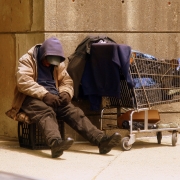
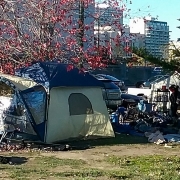
Photo: Don Barrett, via Flickr, under CC 2.0 License.



 Gage Skidmore, used under CC 2.0 License