California’s Vanished Dreams, By the Numbers
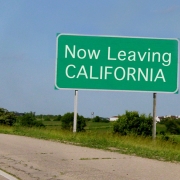
Even today amid a mounting exodus among those who can afford it, and with its appeal diminished to businesses and newcomers, California, legendary state of American dreams, continues to inspire optimism among progressive boosters.
Laura Tyson, the longtime Democratic economist now at the University of California at Berkeley, praises the state for creating “the way forward” to a more enlightened “market capitalism.” Like-minded analysts tout Silicon Valley’s massive wealth generation as evidence of progressivism’s promise. The Los Angeles Times suggested approvingly that the Biden administration’s goal is to “make America California again.” And, despite dark prospects in November’s midterm elections, the President and his party still seem intent on proving it.
But most Californians, according to recent surveys, see things differently. They point to rising poverty and inequality, believe the state is in recession and that it is headed in the wrong direction. Parting with the state’s cheerleaders, the New York Times’ Ezra Klein, a reliable progressive and native Californian, says the Golden State’s failures are “making liberals squirm.”
Reality may well be worse than even Klein admits. In a new report for Chapman University, my colleagues and I find California in a state of existential crisis, losing both its middle-aged and middle class, while its poor population faces dimming prospects. Despite the state’s myriad advantages, research shows it plagued by economic immobility and inequality, crushing housing and energy costs, and a failing education system. Worse than just a case of progressive policies creating regressive outcomes, it appears California is descending into something resembling modern-day feudalism, with the poor and weak trapped by policies subsidized by taxes paid by the rich and powerful.
California may conjure images of Rodeo Drive and Malibu mansions in the public imagination, but today the state suffers the highest cost-adjusted poverty rate in the U.S. The poor and near-poor constitute over one third – well over 10 million – of the state’s residents according to the Public Policy Institute of California. Los Angeles, by far the state’s largest metropolitan area, and once a magnet for middle class aspirations, has one of the highest poverty rates among major U.S. cities. A United Way of California analysis shows that over 30 percent of residents lack sufficient income to cover basic living costs even after accounting for public-assistance programs; this includes half of Latino and 40 percent of black residents. Some two-thirds of noncitizen Latinos live at or below the poverty line.
“In California, there is this idea of ‘Oh, we care about the poor,’ but on this metric, we are literally the worst,” Stanford’s University’s Mark Duggan, principal author of an economic comparison of California with Texas, told the San Francisco Chronicle.
The state’s poverty and associated dysfunction are on full display in leading cities like Los Angeles and San Francisco, where a large underclass now inhabits the streets – the once-iconic locales having become poster children for urban dysfunction. Beyond massive homeless camps, crime has become so bad that the LAPD has warned tourists it can no longer protect them. San Francisco, meanwhile, suffers the highest property crime rate in the country. Businesses like Walgreens have shut down numerous Bay Area locations due to “rampant burglaries.” Homelessness and crime increasingly dominate the state’s political discourse, particularly in these two deep blue bastions.
California also faces growing inequality. By the Gini index, a measure of the distribution of income across a population, California has the third-highest inequality behind New York and Louisiana, and has experienced the fifth largest expansion of inequality since 2010, according to American Community Survey data. California also suffers the widest gap between middle- and upper-middle-income earners of any state.
Read the rest of this piece at Real Clear Investigations.
Joel Kotkin is the author of The Coming of Neo-Feudalism: A Warning to the Global Middle Class. He is the Roger Hobbs Presidential Fellow in Urban Futures at Chapman University and Executive Director for Urban Reform Institute. Learn more at joelkotkin.com and follow him on Twitter @joelkotkin.
Homepage photo: NeoBatfreak Wikimedia under CC 4.0 License.

 Thomas Hawk