
Why Latinos Are California’s Best Hope for a Sane Housing Market
Californians rank housing as their biggest concern — and Sacramento politicians seem determined to keep it that way.
To be sure, there are much-hyped new bills meant to speed up new construction — but they favor high-density around transit stops while imposing taxes on homes in places where people have to drive to get around.
Gov. Gavin Newsom, who bought a new $9 million house in 2024, claims to be taking bold steps to address the state’s miserable housing crisis, but with laughably poor results.
California’s current housing policy often assumes the household of the future prefers a dense, urban, transit-oriented, car-light lifestyle, a preference held by only about 20% of buyers nationally.
Newsom also made sure to exempt wealthy blue areas like Marin and Santa Barbara, areas known for their opposition to almost all development.
As for the rest of us, our preferences don’t matter much.
The vast majority of Californians, particularly families, don’t want to live in rabbit warrens, with little space and no yard. A recent Public Policy Institute of California (PPIC) survey found that 70% of Californians prefer single family residences. And the vast majority, according to a poll by former Obama campaign pollster David Binder, oppose legislation, written by Democratic state Sen. Scott Wiener, that would ban single-family zoning in much of the state.
A new report out this week from Chapman University’s Center for Demographics and Policy spells out the result of the policy disconnect. The big losers are minorities and young people, the supposed base of today’s progressives.
The state’s African American home ownership rate is 35.5% — well below the national rate of 44% — and the state’s Latino homeownership rate is ranked 41st nationwide. For adults under 35, California’s homeownership rate is near 24%, compared with roughly 38% nationally.
The reason is obvious: A California household in 2025 needed an annual income above $213,000 to afford a median price home, notes Chapman’s Karla Lopez Del Rio.
Today only 18% of Californians can afford a home at the median price. That’s compared to 37 percent nationally and 40% in Texas. A generation ago, a California home cost roughly four times a family’s annual income; today the statewide ratio is above eight, and in the coastal metros it runs past 10.
Read the rest of this piece at California Post.
Joel Kotkin is the author of The Coming of Neo-Feudalism: A Warning to the Global Middle Class. He is the Roger Hobbs Presidential Fellow in Urban Futures at Chapman University and and directs the Center for Demographics and Policy there. He is Senior Research Fellow at the Civitas Institute at the University of Texas in Austin. Learn more at joelkotkin.com, follow him on Substack and Twitter @joelkotkin.
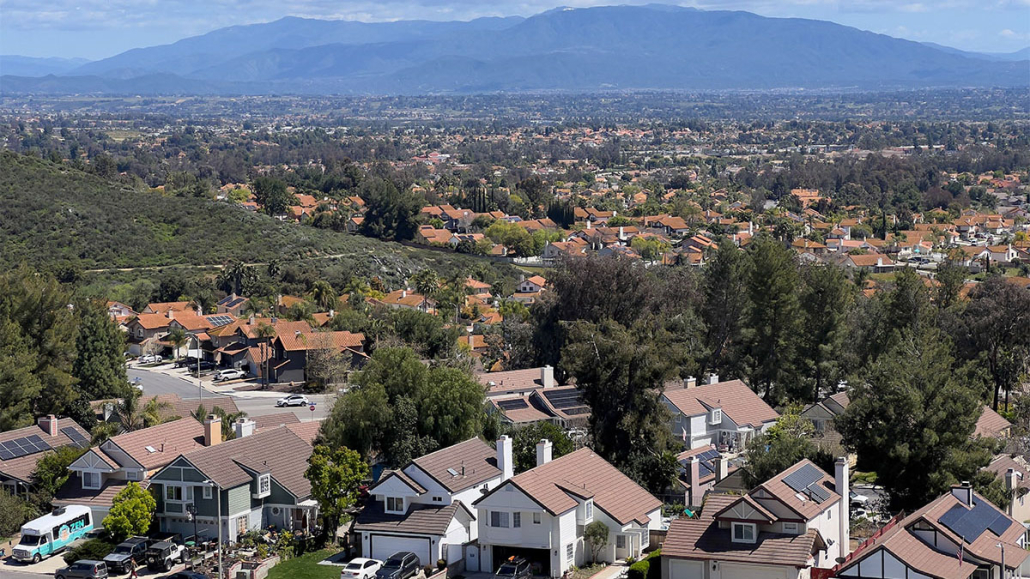
Photo: by Zslvs; aerial view of Murrieta, southwest Riverside County, via Wikimedia in Public Domain.

 Russ Loar, used under CC 2.0 License
 Gage Skidmore, used under CC 2.0 License








 Public Domain

 Public Domain