Kill Off the Old City So New Cities Can Be Born
After decades of self-celebration and relentless media hype, the great “urban renaissance” predicted by the New Urbanists—a vision of cities built by and for the creative class—has come crashing down. Where the smart set once proclaimed that mayors should rule the world or that economic growth would increasingly cluster in a handful of super cities, now even The New York Times bleakly warns of an “urban doom loop.”
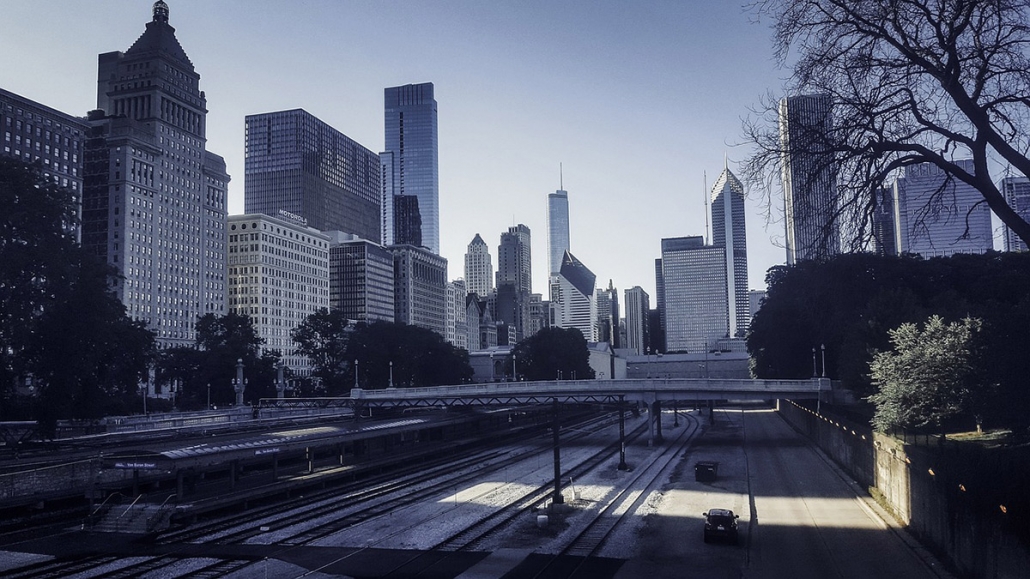
The very impressive blocks of skyscrapers that housed many of the world’s leading corporations have gone from harbingers of the future to something resembling the abandoned factory towns of the Industrial Revolution. Transit systems critical to the old urban model are in free fall. In great cities like New York, Los Angeles, or San Francisco, criminals and the homeless, many of them mentally disturbed and unstable, lurk on the streets, in the parks, and in the stores.
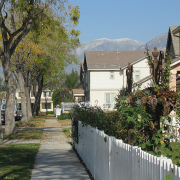
At the same time, residential neighborhoods in places like New York, Boston, and even much of San Francisco have retained their streetwise vitality. Since the pandemic, Brooklyn has experienced a resurgence of new businesses while Manhattan has seen large declines, particularly in its office-dependent retail sector. Additionally, a new and largely unheralded chapter of urbanity is being written in suburbs and exurbs as these areas, once derided as cultureless wastelands, are increasingly walkable and diverse, in some ways challenging the supremacy of traditional cities by becoming more like them. Even as urban centers struggle, their peripheries are flourishing. This is the emerging shape of today’s American urban landscape.
The decline of the transactional city
Urban history is about change. In classical times, imperial cities—Babylon, Rome, Beijing, Constantinople, Baghdad, Tenochtitlan—dominated by feeding off the wealth and labor of subject peoples. Later, in the West at least, urban giants were supplanted by small, nimble trading cities such as Genoa, Florence, Lubeck, Antwerp and Amsterdam—places that offered, as Rene Descartes put it, “an inventory of the possible.” With the industrial era came another urban form, this time built around mass manufacturing, epitomized by Manchester, Leeds, Dusseldorf, Osaka, Wuhan, Sao Paolo, Chicago, Cleveland, and Detroit.
As manufacturing hubs suffered de-industrialization in the late 20th century, prospects rose instead for what Jean Gottman described as the “transactional city,” characterized by massive high-rise office buildings filled with elite professionals occupying “the commanding heights” of towers in London, New York, San Francisco, Chicago, and Tokyo. These cities were widely hailed by academic researchers as presaging a high-tech economic future where, as The New York Times’ Neil Irwin predicted, “a small number of superstar companies choose to locate in a handful of superstar cities.”
Yet even as the transactional city was being praised, there were clear (albeit ignored) signs of a slow, inexorable decline. Office occupancy has been declining since the turn of the 20th century, and the construction of new office space has also fallen. In 2019, before the pandemic, construction was at one-third the rate of 1985, and half that of 2000.
Wealth and educated people, meanwhile, continue migrating to the periphery. As are the big multinationals, with some companies planning to reduce their office footprint by as much as 20%.
Read the rest of this piece at Tablet.
Joel Kotkin is the author of The Coming of Neo-Feudalism: A Warning to the Global Middle Class. He is the Roger Hobbs Presidential Fellow in Urban Futures at Chapman University and Executive Director for Urban Reform Institute. Learn more at joelkotkin.com and follow him on Twitter @joelkotkin.
Photo: Hanna, under CC 0 Public Domain License.