Who Will Prosper After the Plague?
The COVID-19 pandemic is likely to widen even further the growing class divides now found in virtually every major country. By disrupting smaller grassroots businesses while expanding the power of technologies used in the enforcement of government edicts, the virus could further empower both the tech oligarchs and the “expert” class leading the national response to the crisis.
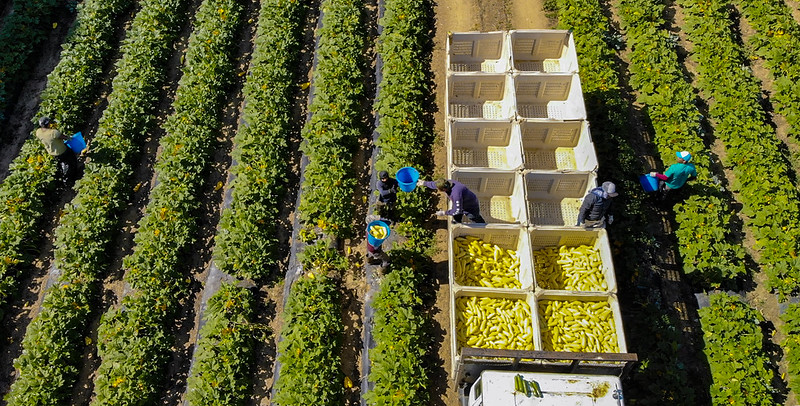
In our increasingly feudal society, the small property owning yeomanry who operate the local businesses essential to Los Angeles shopping streets, and New York neighborhoods are already under threat and will be squeezed further by both the pandemic and its aftermath. But even more hard-pressed will be the growing, propertyless serf class that includes laid-off workers and the roughly 50 to 60 million workers in essential jobs, notes a new report from Richard Florida, and of those, 35 to 40 million require close physical proximity as opposed to those who can retreat to safety behind their computers. Roughly 70% of these workers are in low-wage professions, such as food preparation, and often, despite their increased risk, often lack health insurance from their employers.
Plagues, such as in the 14th century, may have wiped out as much as one third of Europe’s population, and devastated great Renaissance trading cities. In the Middle Ages, the wealthy sought safety in their country estates, much like the affluent now fleeing major European and American cities. Diets and survival rates varied enormously between the upper and lower classes. As one 14th-century observer noted, the plague “attacked especially the meaner sort and common people—seldom the magnates.”
But the wreckage also created new opportunities for those left standing. Abandoned tracts of land could be consolidated by rich nobles, or, in some cases, enterprising peasants, who took advantage of sudden opportunities to buy property or use chronic labor shortages to demand higher wages. “In an age where social conditions were considered fixed,” historian Barbara Tuchman has suggested, the new adjustments seemed “revolutionary.”
What might such “revolutionary” changes look like in our post-plague society? In the immediate future the monied classes in America will take a big hit, as their stock portfolios shrink, both acquisitions and new IPOs get sidetracked and the value of their properties drop. But vast opportunities for tremendous profit available to those with the financial wherewithal to absorb the initial shocks and capitalize on the disruption they cause. As in 2016, politicians in both parties have worked hard in the new stimulus to get breaks for their wealthy constituents, whether they are big retail chains, rich California taxpayers, or, in some cases, themselves.
Over time, the crisis is likely to further bolster the global oligarchal class. The wealthiest 1% already own as much as 50% of the world’s assets, and according to a recent British parliamentary study, by 2030, will expand their share to two-thirds of the world’s wealth with the biggest gains overwhelmingly concentrated at the top 0.01%.
In an era defined by “social distancing,” with digital technology replacing the analog world, the tech companies and their financial backers will prove the obvious winners. In a sign of what’s to come, tech stocks have already soared.
The biggest long-term winner of the stay-at-home trend may well be Amazon, which is hiring 100,000 new workers. But other digital industries will profit as well, including food delivery services, streaming entertainment services, telemedicine, biomedicine, cloud computing, and online education. The shift to remote work has created an enormous market for applications, which facilitate video conferencing and digital collaboration like Slack—the fastest growing business application on record—as well as Google Hangouts, Zoom, and Microsoft Teams. Other tech firms, such as Facebook, game makers like Activision Blizzard and online retailers like Chewy, suggests Morgan Stanley, also can expect to see their stock prices soar as the pandemic fades and public acceptance of online commerce and at-home entertainment grows with enforced familiarity.
Read the rest of the piece at Tablet.
Joel Kotkin is the Presidential Fellow in Urban Futures at Chapman University and Executive Director for Urban Reform Institute — formerly the Center for Opportunity Urbanism. His last book was The Human City: Urbanism for the Rest of Us (Agate, 2017). His next book, The Coming of Neo-Feudalism: A Warning to the Global Middle Class, is now available to preorder. You can follow him on Twitter @joelkotkin
Photo credit: USDA via Flickr in Public Domain.