Socialism for the Elites
Socialism is au courant in America today, though in its 21st-century form, it is less a rebellion of the proletariat than a by-product of the capitalist elite. Through its continued efforts to decrease the returns to human labour and by financing the very groups and ideologies increasingly dedicated to its overthrow, socialism has found fertile ground.
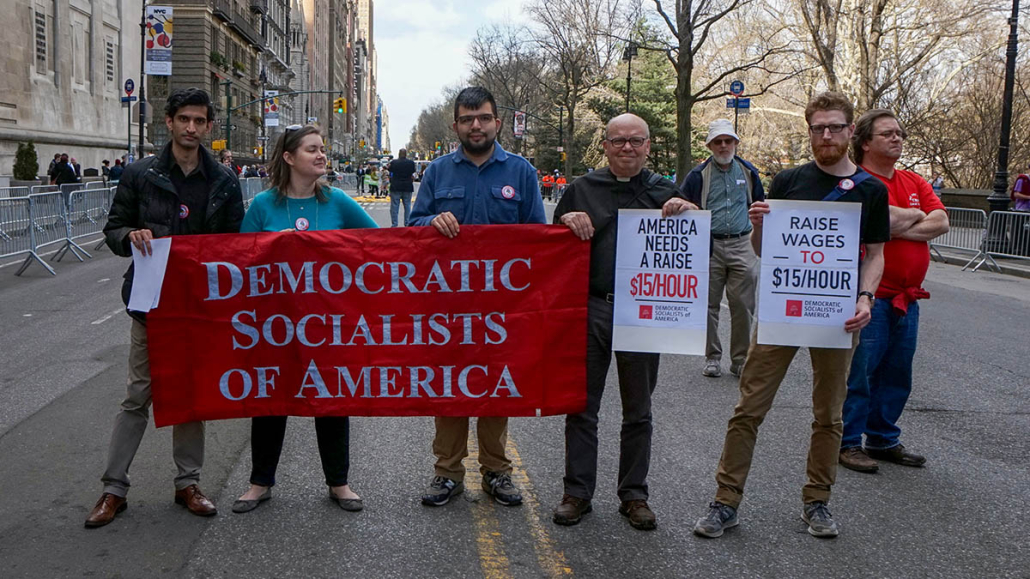
Today, more than one in four Americans waves the red flag. And no wonder. The oligarchs have engaged in increasingly brazen spending on themselves – epitomised by Jeff Bezos’s profligacy – while the widely unpopular AI boom they’ve ushered in seems to be leaving everyone else behind. Amid record profits, Big Tech firms have cut some 240,000 jobs since 2024. Amazon alone cut 30,000 roles in the past year.
Overall, productivity is rising but wages are not. A small group of elite tech workers at AI firms just cashed in $14 billion, but that will not be much comfort to those now unemployed. As economist Gad Levanon notes, ‘Ownership of future profit streams is concentrating far faster than employment, output or people’.
The pattern of rapacity is magnified by the Trump administration capitalising on its power, particularly through its dealings in the Middle East and its cryptocurrency speculation. The Bidens may have been scummy, but their corruption was of the six-figure kind as opposed to seven, eight or more.
The Big Tech elites tend to back progressives, but their vision of a roboticised future – where work is performed by machines while people are reduced to relying on state handouts – leaves many cold. Sam Altman, generally a supporter of Democrats, wants AI bots to serve as a ‘super assistant’ for every part of life, supplanting the roles once played by parents, friends, teachers, ministers and neighbours. Mark Zuckerberg, a longtime donor to Democrats, thinks human contact can be supplanted by the properly customised bots in his Metaverse. Peter Thiel warns darkly of ‘a deadly race between politics and technology’, with technology deemed superior to democracy. Thiel, who has funded many on the tech right, embraces the notion that the cognitively gifted should forge the future.
Tech executives, until the socialist insurgency, had little to fear from the Democrats. With the reformist but free-market-centred politics of JFK, LBJ and Bill Clinton, capitalism worked for most, producing opportunities to start businesses, buy homes, move up in income and secure a decent retirement. But today, that promise has faded. There’s much chatter about a rising ‘the upper-middle class’ but many of the ostensible gains, particularly for the young, have faded under the weight of inflation. The winners are at the commanding heights: the top one per cent of households have increased their share of national income from nine per cent in 1979 to 18 per cent in 2022. In contrast, the middle orders and poor have fallen back.
The same results seem to transcend parties and administrations. No wonder that even in a moderately good economy, public dissatisfaction is at historic lows. Less than 10 per cent of Americans under 30 think the country is heading in a good direction. Jobs like cleaning the New York subway, with good benefits and steady work, now attract tens of thousands of new applicants.
Fading promise drives successful socialist agitation. Of course, most Americans – particularly older ones – still embrace the capitalist ethos that worked for so many of them. The US has produced some 26million millionaires, only slightly less than the rest of the world combined. Last year, millionaires were made at a rate of nearly 1,200 a day.
Until recently, Americans displayed, as Marx wrote in Das Capital, the remarkable ‘versatility’ that could turn ‘The wageworker of today’ into tomorrow’s ‘independent peasant or artisan, working for himself’. And as Engels noted, Americans are ‘born conservatives’ and ‘purely bourgeois’. They may detest big corporations but, at the same time, love the notion of ‘free enterprise’. Only when the spectre of opportunity fades can socialism embed itself in this most individualistic of countries.
Read the rest of this piece at Spiked.
Joel Kotkin is the author of The Coming of Neo-Feudalism: A Warning to the Global Middle Class. He is the Roger Hobbs Presidential Fellow in Urban Futures at Chapman University and and directs the Center for Demographics and Policy there. He is Senior Research Fellow at the Civitas Institute at the University of Texas in Austin. Learn more at joelkotkin.com, follow him on Substack and Twitter @joelkotkin.
Photo credit: The All-Nite Images, via Flickr under CC 2.0 license.