Make the Gulf Irrelevant Again
Whatever one thinks of the current war in Iran, allowing the fundamentally unstable Islamic Republic power over the world economy is truly a fool’s errand. In many ways, Iran’s attempt to control the Strait of Hormuz and the Red Sea is playing out in waters long shaped by piracy and imperial rivalry.
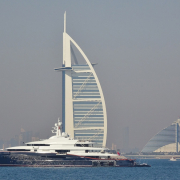
Rather than seek to placate the potentates, crowned or turbaned, the West should instead focus on making the Gulf irrelevant again. Since the days of the Silk Road, where the area played a critical role as a link between Asia and Europe, few in the period of European ascendancy worried much about these territories – that is, until they discovered huge pools of energy there a century ago. Since then, these countries have, at different times, disrupted global commerce and promoted forms of largely Islamist militancy throughout the world. Even Dubai, arguably the most enlightened of the Gulf monarchies, may not be able to thrive long-term in its awful neighborhood.
This is a lesson we should have learned during the oil embargo after the 1973 Yom Kippur War. The Saudi-led effort drove most of the capitalist world into a deep recession. The embargo hit hard because the energy business had swung, in economist Tyler Goodspeed’s words, from ‘a Gulf of Mexico oil market to a Persian Gulf-centric one’. That trend now shows signs of reversing, even if doing so may hurt the Trump family’s financial interests in the region.
To be sure, it will take years, not months, to unwind this primacy. But both the need and the means are clear. Most significant is the US transition from a mega-consumer of energy to the world’s largest producer of oil and gas – giving it the kind of leverage that did not exist in 1973. This shift predates Trump. Fracking boomed under President Obama. President Biden, facing inflation-driven political pressure, expanded drilling in the Gulf of Mexico and Alaska and approved a new LNG plant in Louisiana aimed largely at supplying Europe.
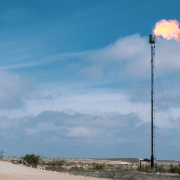
Energy abundance has already made the US far less vulnerable to disruptions in Hormuz, and the boom may only be beginning. Estimates suggest public lands may contain nearly 30 billion barrels of oil and 391.6 trillion cubic feet of gas – enough to supply the US for years. States such as Texas, Louisiana, Oklahoma, North Dakota and Pennsylvania could even benefit if shipping shifts from the Persian Gulf to the Gulf of Mexico. A proposed Alaskan pipeline could also prove vital for Asian markets.
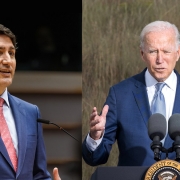
America’s surge forms part of a broader push to develop new energy fields. Advances in fracking, horizontal drilling and geological surveying are turning multiple regions into potential energy superpowers. Canada, once wedded to anti-fossil fuel policies, now aspires to that status, as prime minister Mark Carney suggests. With the world’s fourth-largest oil reserves, it is seeking pipelines to reach Asian customers.
Perhaps the most promising developments are in South America. Venezuela’s vast oil reserves – the largest in the world – could lead to renewed production following the US toppling of Nicolás Maduro, opening the door to US oil companies after years of mismanagement. Mexico, another potential energy powerhouse, has begun embracing fracking to reduce dependence on US imports.
Read the rest of this piece at Spiked.
Joel Kotkin is the author of The Coming of Neo-Feudalism: A Warning to the Global Middle Class. He is the Roger Hobbs Presidential Fellow in Urban Futures at Chapman University and and directs the Center for Demographics and Policy there. He is Senior Research Fellow at the Civitas Institute at the University of Texas in Austin. Learn more at joelkotkin.com, follow him on Substack and Twitter @joelkotkin.
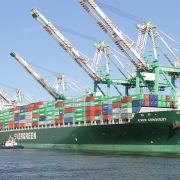
Photo credit: Port of Houston, via Library of Congress.