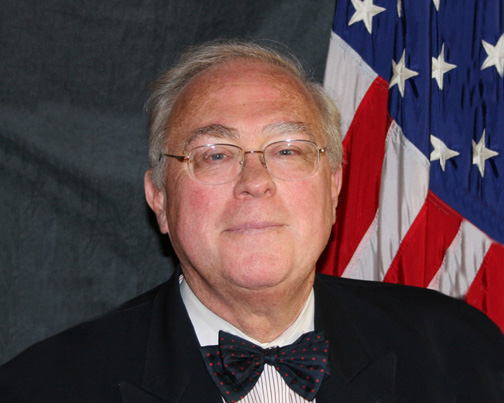
Kevin Starr, Chronicler of the California Dream
Appearing in:
The Orange County Register
“From the Beginning, California promised much. While yet barely a name on the map, it entered American awareness as a symbol of renewal. It was a final frontier: of geography and of expectation.”
— Kevin Starr, “Americans and the California Dream, 1850-1915” (1973)
In a way, now rare and almost archaic, Kevin Starr, who died last week at age 76, believed in the possibilities of California, not just as an economy or a center for innovation, but also as precursor of a new way of life. His life’s work focused on the broadest view of our state — not just the literary lions and industrial moguls but also the farmworkers, the plain “folks” from the Midwest, the grasping suburbanites who did so much to shape and define the state.
His California was not just movie stars, tech moguls, radical academics, talentless celebrities and equally woeful party hacks who dominate the upper echelons. A native San Franciscan, who grew up in a contentious working-class Irish family and never forgot his roots, Kevin’s California was centered on providing, as he said in a recent interview with Boom California magazine, “a better life for ordinary people.” The diverging fortunes of our people — with many in semi-permanent poverty while others enjoy unprecedented bounty — disturbed him profoundly, and, in his last years, darkened his perspective on the state.
Over recent years, Kevin was increasingly distraught by what he saw as “the growing divide between the very wealthy and the very poor, as well as the waning of the middle class” that now so characterizes the state. He saw San Francisco changing from the diverse city of his youth, made up of largely ethnic neighborhoods, to a hipster monoculture. With typical humor, he labeled his hometown as essentially “a Disneyland for restaurants,” a playground with little place for raising middle-class families. California has, indeed, changed over the decades, but not always in a good way.
Kevin Starr’s California
Kevin Starr represented another, more congenial California, one where people could still disagree on issues, but work for common goods. He was, as his wife Sheila told the New York Times, largely a man of the 1950s, a creature of consensus seekers. He served as state librarian under governors Pete Wilson, Gray Davis and Arnold Schwarzenegger. A conservative-leaning centrist Democrat, he did not fit comfortably in a state that has drifted from a vibrant two-party culture to a dominant progressive monoculture with little more than a Republican rump.
In today’s hyperpartisan environment, the Golden State must either be a dystopia (the conservative view) or an emerging paradise on earth (the common progressive mantra). Starr, as a fair-minded historian, saw both realities — not only today but through time. In his multipart “California Dream” series, Starr both confronted reaction against ethnic change and celebrated the process of integration, whether for Latinos, Asians or Anglo Okies, whose unique presence, outside of their descendants, is all but lost in contemporary California.
But what most separated Kevin’s view of California from many others were his humanity and empathy with the aspirations of the state’s middle- and working-class families. Many intellectuals denounce suburbs as racist and exclusionary, as well as environmentally and culturally damaging. Starr saw in them something else — what author D.J. Waldie has described as “Holy Land” — in places like Lakewood, the Bay Area suburbs and Orange County. To him, these were not only places of opportunity, but also landscapes of a reborn “more intimate America,” home to an expanding middle class.
Read the entire piece at The Orange County Register.
Joel Kotkin is executive editor of NewGeography.com. He is the Roger Hobbs Distinguished Fellow in Urban Studies at Chapman University and executive director of the Houston-based Center for Opportunity Urbanism. His newest book, The Human City: Urbanism for the rest of us, was published in April by Agate. He is also author of The New Class Conflict, The City: A Global History, and The Next Hundred Million: America in 2050. He lives in Orange County, CA.
Photo: Institute of Museum and Libraries Service (IMLS website) [Public domain], via Wikimedia Commons