Fred Siegel’s Legacy
Fred Siegel’s passing this weekend represented a huge loss not just for me personally but, more importantly, for all those concerned with the future of the United States, and particularly its cities. Fred was fearless, willing to take on conventional wisdom but always tethered to history in a way that is increasingly rare.
Fred grew up in and around New York, the son of a father who took part in the D-Day landing. He didn’t fit the typical mold for the intellectual giants of our time; coming from modest roots, he went not to the Ivy League but to Rutgers, a state school, before completing his graduate studies and later teaching at SUNY, Queens College, the Sorbonne, and Cooper Union. He never lost his focus on the street-level realities of urban life, particularly in his adopted hometown of Brooklyn. After retirement, he continued to be involved in civic life and was a keen booster of his wife, Jan Rosenberg, as she transitioned from academia to becoming something of a local real-estate mogul.
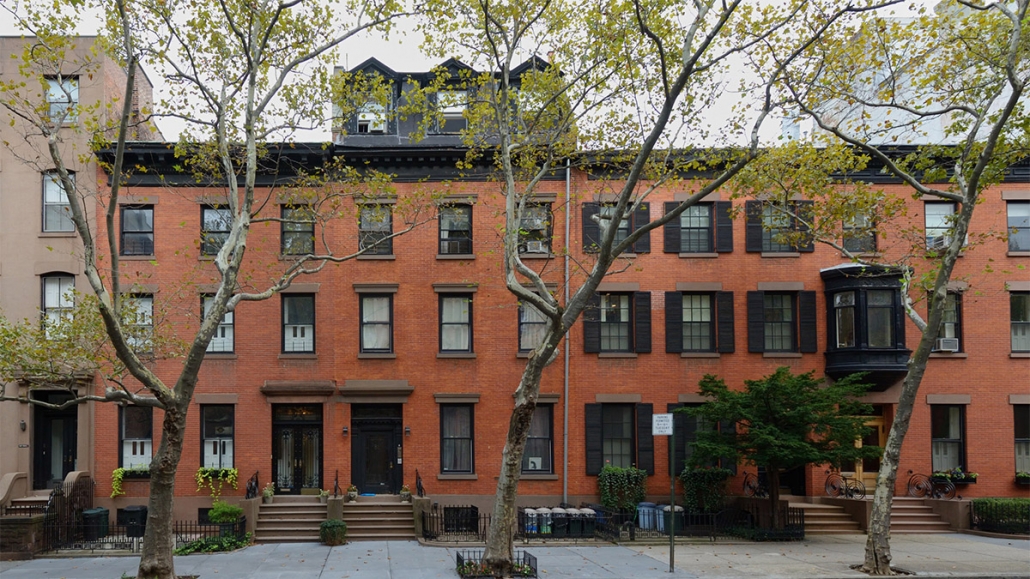
Fred loved cities and would often talk about farmers’ markets, new restaurants, and street fairs as they opened in his corner of Brooklyn, Ditmas Park. What he could not abide was the elitism of so many urbanists and their open hatred of working-class communities and suburbs. There was nothing inevitable about successful cities, he noted; they had to be fought for, which was one reason he was so supportive of Rudy Giuliani’s tough love for New York.
However much he embraced urban life, Fred also knew that cities had to change, and sometimes radically, if they wanted to maintain their position in American life. In his most powerful and prescient book, The Future Once Happened Here (1997), he took a hard look at how welfarist ideology, public unions, and tolerance for crime all contributed to urban decay, not only in New York but also in other cities, including my long-time adopted hometown of Los Angeles. Cities, he warned prophetically, were failing not primarily because of federal policies or racist suburbanites but from their own dysfunction, what he labelled “a suicide of sorts.”
These were prophetic words. In 2020, the Covid-19 pandemic, followed soon after by the devastating George Floyd riots, demonstrated the shaky foundations of the “luxury city,” something Fred and his son Harry wrote about in considerable detail. In our last conversations, Fred mentioned how troubled he was by the trajectory of our greatest cities, especially New York.
Equally important, Fred, whose background was in American history, also dissected the failings of our political and social culture. His influential The Revolt Against the Masses (2014) unveiled the snobbery and prejudice of metropolitan elites, with roots dating back to Wilsonian progressivism. Fred’s diagnosis of the intellectual classes—that they hold American culture and most Americans in contempt—remains spot on.
“In today’s America, Fred wrote, “those who claim to be morally superior all too often enjoy neo-Gilded Age wealth and close ties to government.”
The evolution of liberalism into an elitist philosophy, he pointed out, was rapidly advancing, as tech oligarchs and big investment banks pour billions of dollars into progressive nonprofits that embrace fashionable causes like climate hysteria, gender ideology, and racial obsessions. This linkage of privilege with radical politics was one of Fred’s keenest insights.
Like me, Fred was an instinctive social democrat; he was a protégé of the late, great socialist writer Irving Howe. Our approach to politics, focused on expanding opportunity and ownership for the vast majority and championing a civilized urban culture, enjoyed some support from the Democratic Leadership Council’s Progressive Policy Institute, where we were both fellows. PPI’s brand of progressivism barely exists anymore beyond some aging liberal intellectuals, a few private sector unions, and a small rump of politically marginalized moderate Democrats.
Read the rest of this piece at City Journal.
Joel Kotkin is the author of The Coming of Neo-Feudalism: A Warning to the Global Middle Class. He is the Roger Hobbs Presidential Fellow in Urban Futures at Chapman University and Executive Director for Urban Reform Institute. Learn more at joelkotkin.com and follow him on Twitter @joelkotkin.
Homepage photo: Rick Bern via Wikimedia under CC 3.0 License.