Decentralize Government to Resolve Country’s Divisions
Appearing in:
The Orange County Register
America is increasingly a nation haunted by fears of looming dictatorship. Whether under President Barack Obama’s “pen and phone” rule by decree, or its counterpoint, the madcap Twitter rule of our current chief executive, one part of the country, and society, always feels mortally threatened by whoever occupies the Oval Office.
Given this worsening divide, perhaps the only reasonable solution is to move away from elected kings and toward early concepts of the republic, granting far more leeway to states, local areas and families to rule themselves. Democrats, as liberal thinker Ross Baker suggests, may “own” the D.C. “swamp,” but they are beginning to change their tune in the age of Trump. Even dutiful cheerleaders for Barack Obama’s imperial presidency, such as the New Yorker, are now embracing states’ rights.
The Founder’s Solution
When the founders crafted the Constitution, they confronted a country with deep divisions — rural and urban, slave and free, immigrant and nativist, manufacturing and commodity producing. The solution they came up with had its shortcomings, notably the tolerance of the truly deplorable institution of slavery, but without these built-in restraints the republic likely would not have survived its first decades.
Even after the Civil War settled control of the central government, the country largely followed the founders’ vision of separating and restraining power. Education, zoning, laws and the governing of morality were handled largely at the local level. The federal government focused on things that were its natural purview — interstate transportation, immigration, foreign and defense policy.
Federal intervention remained necessary at times, for example, to assure voting rights. But, overall, maintaining power at the local level has remained broadly popular, with the support of over 70 percent of the adult population. Even in one-party California, most would prefer to see local officials, not those at the national or state level, in control.
Division and the Road to Alternating Dictatorships
As in the antebellum period, American politics sadly reflects two increasingly antagonistic nations. One can be described as a primarily urban, elite-driven, ethnically diverse country that embraces a sense of inevitable triumphalism. The other America, rooted more in the past, thrives in the smaller towns and cities, as well as large swaths of suburbia. Sometimes whiter, the suburbs are both more egalitarian and less reflexively socially liberal.
This division worsened in the Obama era, whose city-centric approach all but ignored the interests of the resource-producing regions of the country, as well as the South. In contrast, under Presidents Bill Clinton and Jimmy Carter, Democrats were joyously competitive in these areas, assuring that the party was truly diverse, rather than simply the lap dog of the littoral constituencies.
With the GOP now in control of Washington, the coastal areas are becoming, to paraphrase President Obama, the new clingers, whether on the environment, racial redress or gender-related issues. Now they fear, with good reason, that the very administrative state they so eagerly embraced could come back to undermine their agenda even at the local level.
Republicans, for their part, are stoking these fears by using statehouse control to slap down efforts by communities in the states they control to embrace progressive policies on minimum wages, transgender bathrooms and fracking bans. By doing this, the GOP could be accused of engaging in its own form of payback, which simply assures that when the Democrats get back in power, they will do the same to them.
How to Reunite the Country — by Decentralization
A better course would be to allow the blue states to push back against federal intrusion, hoping that, perhaps, they have learned a lesson about Washington overreach. The country is too diverse, too different in terms of economics and ethnicity, to find common ground on every issue. The reality of polarization requires greater latitude for local authorities.
The alternative seems to be ever greater dissension and discord. With Trump in power, California progressives dream of secession; had Hillary Clinton won, we’d be hearing hotheads advocating Texas independence.
What is needed is not enforced unanimity but the nurturing of alternatives. We need to allow states to serve as what the progressive U.S. Supreme Court Justice Louis Brandeis described as “laboratories of democracy.” These entities, he suggested, can “try novel social and economic experiments without risk to the rest of the country.” In other words, let Oregon legislate one way, and Texas and Oklahoma another. Voters could then judge which approach they prefer, and try to prove what works best.
Under these localist principles, states, too, should decentralize authority. California’s coastal power structure, largely concentrated in the Bay Area, should not be so able to impose policies that mean real hardship in Fresno, Riverside or Redding. Similarly, progressive redoubts in places like North Carolina should be able to legislate their preferences without being gagged by the more conservative rural areas.
The entire point of the country’s founding was to give communities control over their own money and their own fate. The decades-long rush to centralize power — whatever the political orientation — has tended to only weaken our union, and leave the country on the road, inevitably, to a new kind of interminable civil war.
This article first appeared in Orange County Register.
Read the entire article at Orange County Register
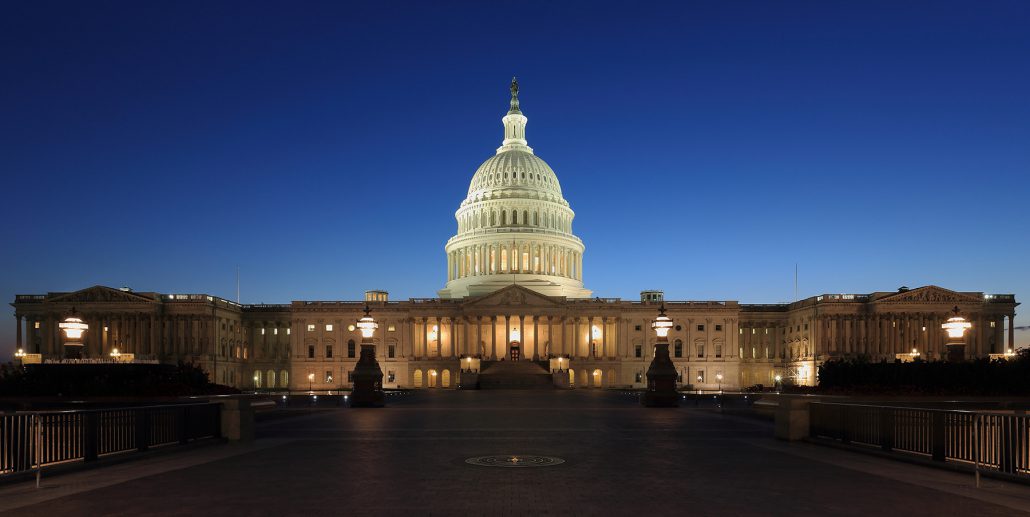
Photo credit: Rhododendrites via Wikipedia, Creative Commons 4.0
Joel Kotkin is the Roger Hobbs Distinguished Fellow in Urban Studies at Chapman University and executive director of the Houston-based Center for Opportunity Urbanism. His newest book, The Human City: Urbanism for the rest of us, was published in April by Agate. He is also author of The New Class Conflict, The City: A Global History, and The Next Hundred Million: America in 2050. He is executive director of NewGeography.com and lives in Orange County, CA.