The Opium of California
The current frenzy of new IPOs — Uber, Lyft, Slack, Postmates, Pinterest and Airbnb — seems destined to reinforce progressive notions that California represents the future not just for the state, but the nation. It will certainly reinforce California’s fiscal dependency on tech-dominated elites — half of the state’s income taxes come from people making over $500,000 a year — and provide a huge potential multi-billion dollar windfall for the state treasury.
To be sure, the insiders — founders, with nearly half the voting shares in companies such as Lyft, a small “tech mafia” of venture firms, foreign investors such as Japan’s Softbank and Wall Street investors — will have reason to celebrate. But the lavish paydays will do little to relieve, and may even serve to worsen, the state’s gaping inequality and nation-leading poverty rates.
Most damaging of all, the IPO high will encourage supporters of the state’s policy agenda. If new companies crop up, and the handful of politically savvy investors thrive, California’s illuminati can fend off criticism of policies that undermine the middle and working class in everything from energy to housing.
The changing nature of California’s tech economy
“Science,” observed Daniel Coit Gilman, the second president of the University of California, ”is the mother of California.” With few navigable rivers, a persistent shortage of water, far from the then-dominant Eastern seaboard, California’s growth depended on engineering prowess. Not tied to the traditional industries, the state seized on emerging fields such as aviation, space and eventually semiconductors, laying the basis for an expanding middle class
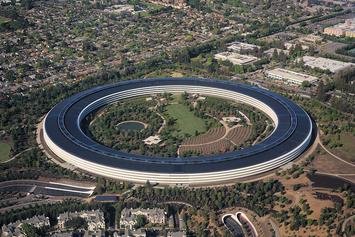
In contrast, little of today’s tech growth produces tangible products, and those that remain, such as Space X, the semiconductor industry and Apple, are placing their production either abroad or in less expensive and less highly regulated states. This allows them to escape California’s high electrical rates, poor roads, collapsing bridges and lagging public education system. The digital future may remain in California but the action in chip-manufacturing, biomedical products or space exploration seems headed elsewhere.
The firms in the new “information peddling economy,” notes the University of Washington at Tacoma’s Ali Modarres, have a very different relationship with their employees than “first wave” companies such as Hewlett Packard and Intel. In the first wave a broad range of employees enjoyed rewards from corporate success and stock gains; drivers for Uber, as one analyst suggests, will get nothing but the privilege of seeing vast flows of cash used to replace them with automated vehicles.
The neo-feudal city
The new wave of IPOs will expand the ranks of what The New York Times aptly describes as “the elite caste who can afford to live comfortably in the Bay Area.” Tech senior managers will enjoy huge capital gains, greatly reducing their federal tax liability. In contrast, less well-placed working schmucks will pay upward of half their income in taxes while those who clean their offices will face potential new fees on everything from tires and soda to water.
Even in the Bay Area, home to four of California’s wealthiest ZIP codes, middle-wage jobs are disappearing and most new growth is tilted toward low-wage service work. Nearly half of all millennials are planning to leave and analysts suggest the area may face a severe shortage of skilled workers. Overall, notes a new Joint Venture Silicon Valley report, homelessness and inequality has expanded in the region, while the quality of life is perceived by most to be deteriorating.
One can appreciate the economic benefits that Uber, Lyft, Salesforce and others have brought to San Francisco, but there’s also a neo-Dickensian reality: sky-high housing prices, widespread homelessness, displaced minorities, few children and a rapidly shrinking middle class. There are now more drug addicts in the city of San Francisco than high school students and so much feces on the street that one website has created a “poop map.” More than half of the Bay Area’s lower-income communities, notes a recent UC Berkeley study, are in danger of mass displacement.
As for the rest of California
In previous tech-led economic booms — as recently as the last decade — growth extended to the rest of the state, particularly the more affordable interior. Tech firms expanded eastward, to Sacramento, south toward Salinas and throughout Southern California. The new tech economy, in contrast, has no real need for a periphery. It expands almost anywhere, whether to media-centric New York, less expensive places including suburban Austin, Nashville or Dallas or to China, India or the Philippines.
This has left much of Southern and interior California an economic dependency, hosting largely on low-wage jobs and increasingly dependent on an expansive welfare state. Worse yet, the tech boom serves as a narcotic, anesthetizing our political leaders from confronting the economic realities outside the venture capital-funded Bay Area bubble.
What is needed now is a focus on the middle- and working-class Californians, the vast majority of whom live far from the Bay Area.
California’s policy makers need to start by rolling back many of the regulations on energy and housing that are reducing opportunity by driving up costs and driving middle-class jobs out of the state. We also need to focus more on developing employment centers outside the ultra-expensive coastal areas, something that would allow people to live closer to where they work. This suggests a policy that focus on such things as good roads, decent schools and a variety of upwardly mobile jobs — things that may not matter much to oligarchs or the youthful staffs, but make all the difference to middle- and working-class families.
To be truly a sustainable society, California needs opportunities for carpenters, machinists, middle managers, not just for the current structure that relies on superstar coders and produces large numbers of low-paid service workers. We need a California boom that lifts most of our citizens and does not drive them toward a permanent semi-feudal state, servants and supplicants of a small, fantastically wealthy and preening technological elite.
This piece originally appeared in The Orange County Register.
Joel Kotkin is the Roger Hobbs Distinguished Fellow in Urban Studies at Chapman University and executive director of the Houston-based Center for Opportunity Urbanism. He authored The Human City: Urbanism for the rest of us, published in 2016 by Agate. He is also author of The New Class Conflict, The City: A Global History, and The Next Hundred Million: America in 2050. He is executive director of NewGeography.com and lives in Orange County, CA.
Photo Credit: Daniel L. Lu (user:dllu) [CC BY-SA 4.0], via Wikimedia Commons