• Link to LinkedIn
  • Link to Facebook
  • Link to Instagram
  • Link to Youtube
  • Link to X
SUBSCRIBE TO NEWSLETTER
Joel Kotkin
  • About
    • Events
  • Media
    • In the News
    • Videos
  • Books
  • Articles
    • Demographics
    • Urban Affairs
    • The Economy
    • Politics
    • Rural Policy
    • Reports
    • Religion
    • California
  • Podcast
  • Speaking
  • Contact
  • Click to open the search input field Click to open the search input field Search
  • Menu Menu
You are here: Home1 / Articles2 / Demographics3 / The Bifurcated City

The Bifurcated City

January 29, 2019/in Demographics, The Economy, Urban Affairs

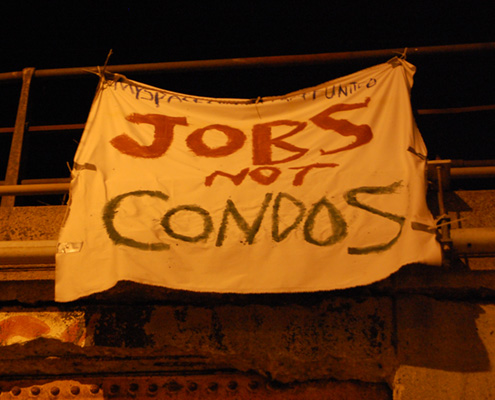
After drifting toward decrepitude since the 1970s, the urban core of many cities have experienced real, often bracing, turnarounds. Yet concern is growing that the revitalization of parts of these cities has unevenly benefited some residents at the expense of others. The crucial, and often ignored, question remains whether the policies that have helped spark urban revivals have improved conditions for the greatest number of residents. In a new study for the Center for Opportunity Urbanism, we found that, in most cities, unbalanced urban growth has exacerbated class divisions, while doing little to address the decline of middle-class households. Our analysis, which puts special focus on the urban cores of Chicago, Los Angeles, and Dallas, shows that the once-rapid growth of urban cores and their surrounding neighborhoods has slowed dramatically; net domestic outmigration, according to Census estimates, has increased from 10,000 in 2012 to 440,000 in 2017. At the same time, some of the most actively gentrifying areas, such as San Francisco, Portland, and Seattle, have become increasingly plagued with social dissolution and rising homelessness.

In recent years, a relatively small downtown population has done better, but surrounding areas have not. Philadelphia’s central core rebounded between 2000 and 2014, but for every district that gained in income, two suffered income declines. Research by urban analysts Joe Cortright and Dillon Mahmoudi shows that the number of high-poverty (more than 30 percent below the poverty line) neighborhoods in the U.S. has tripled in the last half-century, from 1,100 in 1970 to 3,100 in 2010.

Poverty is not, as is widely suggested, now primarily a suburban problem. The poverty rate, according to the American Community Survey, remains two-thirds higher in urban cores than in suburbs. Equally important, many longstanding middle- and working-class neighborhoods are disappearing. Teachers, firemen, and police officers are struggling to afford homes in many American cities, according to a study from Trulia. This pricing-out also applies to many skilled blue-collar professions like technicians, construction workers, and mechanics.

Read the entire article at City Journal.

Homepage photo credit: Eric Allix Rogers via Flickr under CC 2.0 License.

Share this entry
  • Share on Facebook
  • Share on X
  • Share on LinkedIn
  • Share on Tumblr
  • Share on Reddit
  • Share by Mail
https://joelkotkin.com/wp-content/uploads/2019/01/jobs-not-condos.jpg 400 495 Joel Kotkin /wp-content/uploads/2017/01/jkotkin_logo.png Joel Kotkin2019-01-29 12:52:082019-01-29 13:10:08The Bifurcated City
Search Search

Subscribe to Feed

Subscribe to RSS   follow us in feedly

Recent Articles

  • Steve Hilton’s Rise Won’t Kill California Progressivism
  • The Anti-AI Backlash is Building Against Tech Oligarchs Playing God
  • SpaceX IPO Will Bolster American Tech Supremacy
  • Tom Steyer proves things can get worse than Gavin Newsom in California
  • The Evolution of the Iranian American Community

Joel has spoken at many leading universities, business groups, government organizations and more.

INVITE JOEL TO SPEAK

STAY CONNECTED

Join the conversation at Twitter
or Facebook. Visit our YouTube
channel or subscribe to RSS
to read our latest articles.

      Subscribe to RSS  follow us in feedly

Recent Articles

  • Steve Hilton speaking at an event for conservative officials
    Steve Hilton’s Rise Won’t Kill California ProgressivismJune 3, 2026 - 11:40 am
  • The Anti-AI Backlash is Building Against Tech Oligarchs Playing GodJune 1, 2026 - 11:40 am
  • The first launch of the SpaceX Falcon Heavy Rocket on January 6, 2018 from Kennedy Space Center.Daniel Oberhaus, used under CC 4.0 License
    SpaceX IPO Will Bolster American Tech SupremacyMay 29, 2026 - 11:23 am
  • Tom Steyer and the rest of the Democratic field for the California governor's race are scrambling to move left.
    Tom Steyer proves things can get worse than Gavin Newsom in CaliforniaMay 27, 2026 - 11:40 am

Topics

  • Books
  • California
  • Demographics
  • In the News
  • Podcast
  • Politics
  • Religion
  • Reports
  • Rural Policy
  • The Economy
  • Urban Affairs
© Copyright – Joel Kotkin | Site Admin
  • About
  • Media
  • Books
  • Articles
  • Podcast
  • Speaking
  • Contact
Link to: Tech Giants Want to Solve the Housing Nightmare They Created Link to: Tech Giants Want to Solve the Housing Nightmare They Created Tech Giants Want to Solve the Housing Nightmare They Created Link to: Today’s Cultural Engineers Link to: Today’s Cultural Engineers Signage at the Golden GlobesToday’s Cultural Engineers
Scroll to top Scroll to top Scroll to top