SpaceX Spinoffs Launch El Segundo into Economic Orbit
El Segundo’s Chris Pimentel may be California’s happiest mayor. As his counterparts in Los Angeles, San Jose and San Francisco struggle with budgetary nightmares, Pimentel has at his disposal rising revenues, a booming job market and an energetic business community.
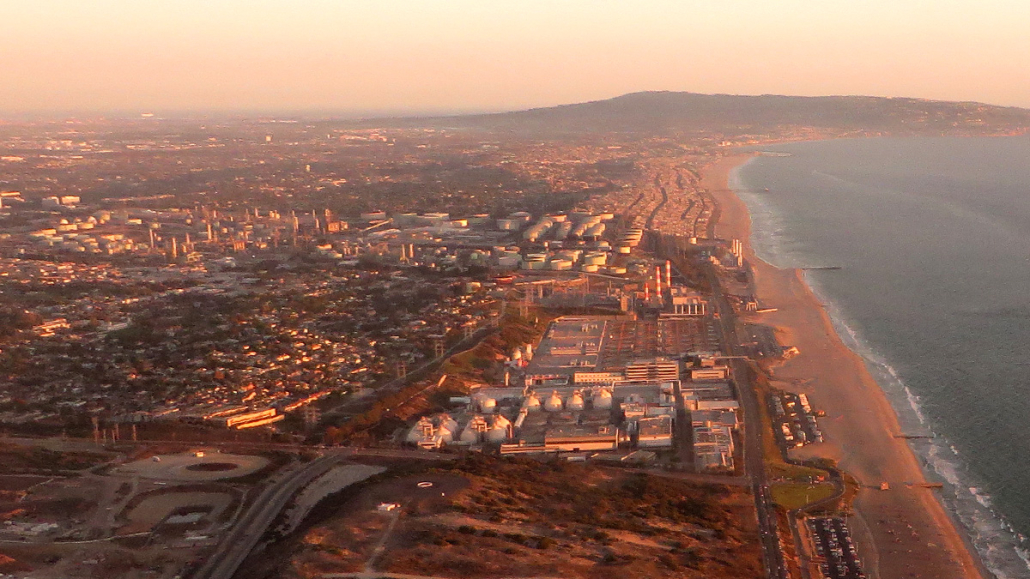
The reason: His small town of 17,000 south of LAX is the birthplace of SpaceX, and has emerged as the aerospace startup mecca in Southern California.
“We try to reduce friction,” Pimentel, who served with the Marines in Iraq, suggests. “It’s a whole city effort; this is a city that likes business.”
Space and defense have deep roots in El Segundo. Elon Musk started SpaceX here in 2002 at 1310 East Grand Ave, before it moved onto grander things. As of Friday, SpaceX is among the richest companies on the planet
Sadly, the company is no longer headquartered in Southern California, as I can attest having seen their ultra-modern headquarters in Bastrop, 30 miles from the Austin, Texas, airport. Thank our idiot state government for booting out what may become the world’s most important company.
California’s elected officials, and its insane policies, deeply alienated Musk, the world’s predominant space pioneer. Before that, they had already succeeded in losing the headquarters of virtually all the top traditional aerospace firms.
Yet fortunately for California, and especially El Segundo, many Space X subcontractors remain, while others have spun off from the mothership. These smaller firms, despite the best efforts of Sacramento and City Hall, have helped the Golden State to retain its aerospace dominance.
The key lies here lies with our still-powerful talent base. Southern California boasts almost twice as many aerospace engineers as second-place Texas. The allure of this talent has led one of Space X’s strongest competitors, Rocket Labs, to relocate from New Zealand to Long Beach.
Los Angeles County also receives more dollars from DARPA, the Pentagon’s tech fund, than any county in the nation, accounting for 16% of all funding. Even as signature industries like entertainment and business services struggle, California’s aerospace industry headcount has grown by over nine percent over the past decade.
This is all the more remarkable given that the state seems determine to drive these jobs to other states, notably Texas and Florida. These states, each of whom has a Space Commission (which California does not), coast lower costs and a generally favorable business environment.
Someone ought to remind our politicians that while entertainment jobs have been trending down, the space industry has been adding workers at steady pace.
Read the rest of this piece at California Post.
Joel Kotkin is the author of The Coming of Neo-Feudalism: A Warning to the Global Middle Class. He is the Roger Hobbs Presidential Fellow in Urban Futures at Chapman University and and directs the Center for Demographics and Policy there. He is Senior Research Fellow at the Civitas Institute at the University of Texas in Austin. Learn more at joelkotkin.com, follow him on Substack and Twitter @joelkotkin.
Photo credit: Ken Lund, via Flickr under CC 2.0 license.