
The Return of American Class Politics
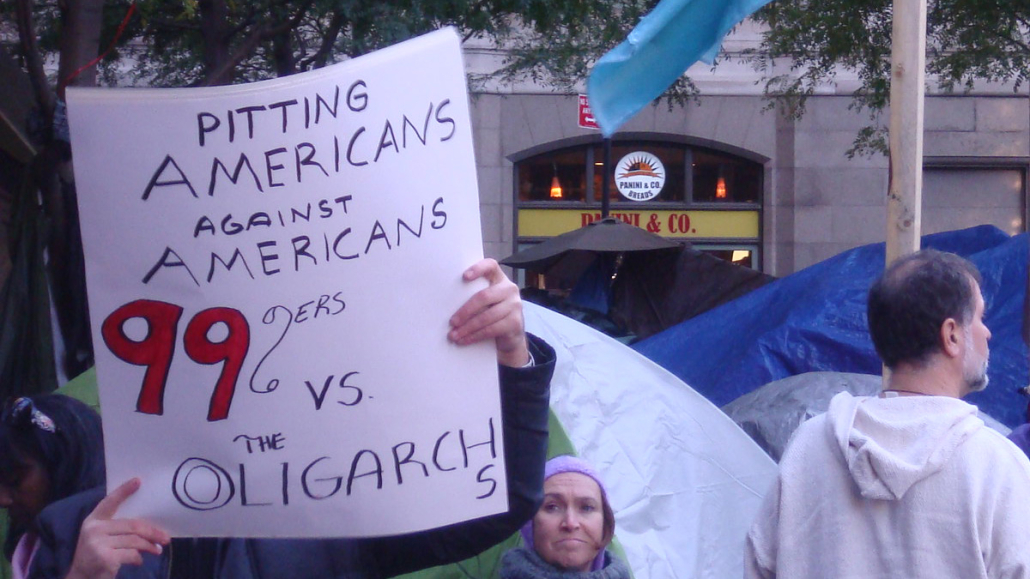
In his farewell address, mere days before leaving the White House, Joe Biden made a dramatic intervention. Warning about how an oligarchy of “extreme wealth, power and influence” risked the basic rights of every citizen, he even suggested it could threaten American democracy itself. Given how late Biden’s intervention came, to say nothing of his typically stumbling delivery, it’s tempting to dismiss his comments as the rantings of a tired old man.
In truth, though, I think the speech matters. For in its populist appeal to Main Street over Wall Street, it reflects the revival of something we haven’t seen in years: class politics. Rather than appealing to racial subgroups, or sex or gender identity, Biden instead spoke, however fleetingly, to those many millions of Americans who care more about their paychecks than the colour of their skin.
Nor, of course, is the 46th president alone. Increasingly, both main parties realise that to win at the ballot box, they must appeal to the middle- and working classes, as proven by Trump’s roughly 10-point lead among those two-thirds of Americans without a college degree. Yet, if that speaks vividly to radical shifts across US socioeconomic makeup, it remains unclear if politicians on either side of the aisle are truly willing to back blue-collar workers — especially when the oligarchs continue to have such a grip over them all.
For all Biden’s warnings about oligarchy, the elite did very well during his tenure. Consider the numbers, with the wealthiest Americans increasing their collective net worth by a remarkable one trillion dollars over his time in office. The monopolists, for their part, have been generous in their turn. In 2020, to give one example, Biden received 25 times as much funding from tech companies than Trump, and over three times as much from Wall Street. Among electronics manufacturing firms, many of whom build their products outside the country, the margin was a remarkable $68 million to $4 million.
All the while, American business continued to consolidate, just as it has for a generation. The Review of Finance notes that three quarters of industry has become more concentrated since the late Nineties. This has been most notable across finance, where big banks have doubled their market share since 2000. The same is true elsewhere: a coterie of tech firms now account for a record 35% of market cap. No wonder only 22% of Americans were optimistic about the economy by the end of Biden’s term, even as confidence in his economic leadership had fallen to just 40%.
Taken together, then, Biden’s fall stemmed from an enormous miscalculation. Elected as a moderate, he ignored polls that suggested most Americans were more concerned with their economic prospects than issues like climate change and foreign affairs, let alone social justice manias around trans rights. Nonetheless, the Democrats followed the lead of their oligarchic funders, many of whose biggest contributions have been focused on exactly these side issues.
When the election came, no wonder so many blue collar Americans tried their luck with Trump: including a remarkable number of minority voters. Once again, the statistics here are clear, with 40% of Asians voting for him, well above the 30% in 2020, even as some African Americans headed to the GOP as well. Blue-collar Latinos went heavily for Trump too. The point is that this realignment largely happened on economic grounds, with minorities ignoring Trump’s past litany of racist comments because he offered them a more expansive economy, particularly in blue collar professions. All the while, they saw little promise in the tsunami of promises offered by Harris and her bozo vice-presidential partner Tim Walz. Knowing a winner when they see one, America’s billionaires duly came out for the Republicans too. That included Elon Musk, of course, but also prominent investment bankers like Bill Ackman.
Taken together, what does this revolution show? That class and economics now play a greater role in American politics than skin colour or national origin. If you want to secure minority voters, the new President clearly understands, you appeal to them not as identity groups but as individual people, and families, looking out for their own self-interest. Nor is this really revelatory. America’s working-class remains more aspirational than those in other Western countries. That’s equally true of non-white voters, many of whom appreciate that the politics of race is an impediment to the American Dream. Most of the middle-income people who lately lost their homes to fire, in the minority LA suburb of Altadena, hardly benefited from a city government more obsessed with race and gender than protecting property. No less telling, Democratic policies on water and climate have created what attorney Jennifer Hernandez calls a “green Jim Crow” — where working-class minorities face increasing headwinds in terms of jobs and housing.
“Class and economics now play a greater role in American politics than skin colour or national origin.”
Read the rest of this piece at Unherd.
Joel Kotkin is the author of The Coming of Neo-Feudalism: A Warning to the Global Middle Class. He is the Roger Hobbs Presidential Fellow in Urban Futures at Chapman University and and directs the Center for Demographics and Policy there. He is Senior Research Fellow at the Civitas Institute at the University of Texas in Austin. Learn more at joelkotkin.com and follow him on Twitter @joelkotkin.
Photo: Jagz Mario, under CC 2.0 License.






 White House Archives, Public Domain