 Public Domain
The End of Green Energy
Not long ago, all right-thinking liberals were sure that fossil fuels would soon become “stranded assets” as The Guardian once put it. Hydrocarbon-based energy sources, the thinking ran, would become ever more worthless as the world entered a bright renewable future. Yet as President Trump’s takeover of Venezuela demonstrates, there is, in fact, a lot of life left in those deposits; as the progressive American Prospect recently lamented, the “fossil-fuel empire” has struck back.
The takeover in Venezuela brings under US control the world’s largest proven oil reserves. Under Trump, Washington saw Venezuelan energy bolstering hostile countries, especially oil-import-dependent China. For now, the Venezuela coup deprives the Middle Kingdom of upwards of 800,000 daily barrels, while taking away a valuable customer as well as an intelligence asset for the Russians and their Islamist allies.
This naked neo-imperialism could prove beneficial, not least for the hard-pressed Venezuelans. American supermajors like Chevron are also natural beneficiaries, with huge resources being placed to modernise the country’s shambolic energy industry and thus to restore its once proud relative prosperity.
The larger point is that successful economies either have fossil fuels or need easy access to them. Gas reserves, and the revenues they generate, grant places the Persian Gulf monarchies far more influence than populous Arab states like Egypt, which lack oil and gas. Russia has been able to underwrite its invasion of eastern Ukraine and withstand severe Western sanctions thanks to its hydrocarbon reserves. China and India look to secure imports of the same wherever they can, especially at bargain prices. Core European powers like Britain, France, and Germany, meanwhile, could punch far above their weight if they would but tap their own plentiful supplies of shale gas, but their governments refuse to do so owing to irrational green phobias about hydraulic fracturing.
Beyond Europe, however, the recognition of fossil fuels as a key element of geopolitics puts a stopper on decades of green campaigns designed to instill fear of emissions and promote wishful thinking about how to reduce them. In academia and the media, dissenters from the narrative, even academics who accepted anthropogenic climate change, are hounded if they fail to submit to the green papacy’s encyclicals.
But the green doomerism has failed to meet the reality test. We now know that predictions of climate crises, some of which date back to the 1970s, have turned out to be exaggerated or even plain wrong. For example, both ABC and NBC boldly predicted in 2008 that New York would be under water by 2015; last time I visited my familial home town, however, it seemed very much on dry land. Extinction rates, often blamed on climate change, have slowed, with even the polar bears continuing to thrive in somewhat warmed temperatures.
A 2021 paper by Carnegie Mellon University researchers David Rode and Paul Fishbeck tracked apocalyptic predictions dating from the first Earth Day in 1970. Across half a century, 61% of the forecasts of planetary collapse have come and gone (and the planet is still here, chugging along). Even the committed climate sirens at Nature journal have been forced to retract a study that claimed the world economy would contract due to climate change.
Read the rest of this piece at UnHerd.
Joel Kotkin is the author of The Coming of Neo-Feudalism: A Warning to the Global Middle Class. He is the Roger Hobbs Presidential Fellow in Urban Futures at Chapman University and and directs the Center for Demographics and Policy there. He is Senior Research Fellow at the Civitas Institute at the University of Texas in Austin. Learn more at joelkotkin.com and follow him on Twitter @joelkotkin.
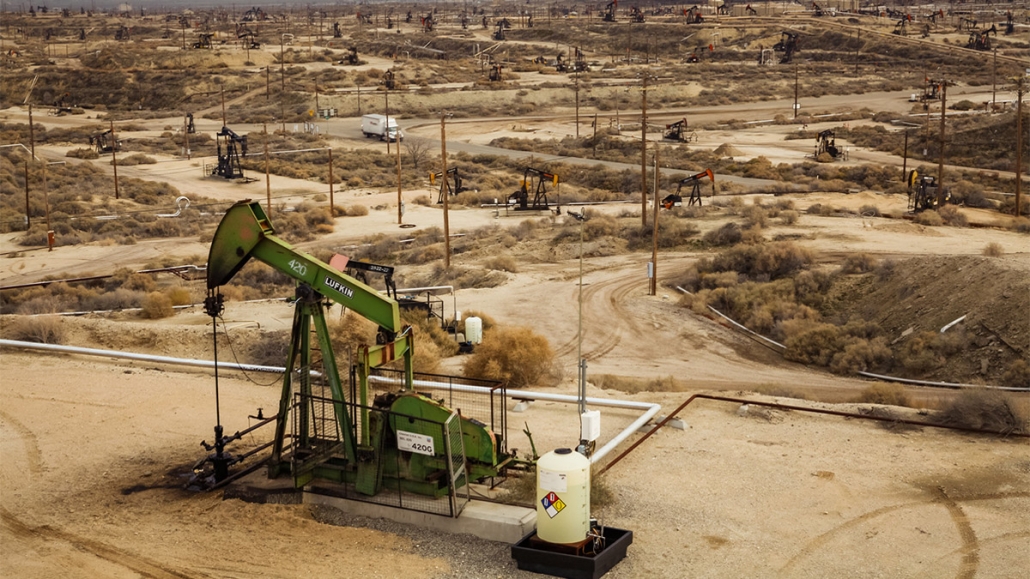
Photo: Bureau of Land Management, in Public Domain
 Thomas Hawk