How Federal Lands Can Be Used to Ease the Housing Crisis
Next to inflation, Americans ranked housing as their top financial concern in a Gallup survey last May. Since then, it’s gotten only worse. January home sales were down 5 percent from last year’s dismal numbers. Record numbers of first-time buyers are stuck on the sidelines as housing affordability stands at its lowest level in 40 years.
President Trump must follow through on his campaign pledge “to open up tracts of federal land for housing construction.”
The housing market depends largely on interest rates and zoning — factors outside any president’s direct control. But the massive federal land portfolio gives middle- and lower-income Americans a better shot at homeownership. The federal government is the nation’s biggest landowner, holding one-third of all property — a land mass six times the size of California.
In Las Vegas, Phoenix, Albuquerque and other metro areas, federal lands brush up against the suburban periphery. Since President Trump launched the idea of “Freedom Cities” on federal land, the opening of federal lands for development has entered the policy mainstream. House Budget Committee Republicans have floated the sale of federal lands as an option for closing the deficit.
To create affordable homes on federal lands, the federal government shouldn’t sell lands for development — it should lease them. The sale of federal lands requires the buyer to comply with state and local regulations once the land is privatized, likely with the same awful result. Leasing the federal lands, on the other hand, cuts through the red tape.
Local land-use policies that make housing a luxury good in many parts of the U.S. — such as California’s solar mandate and the state’s aversion to suburban developments that rely on “car-oriented transportation” — do not apply on federal lands. Anti-growth locals and density-obsessed planners stay sidelined.
For more than a century, federal law has long authorized federal leases for commercial purposes such as mineral extraction. Congress should update its land-use laws, including the Federal Land Policy and Management Act of 1976, to authorize federal leases for housing development, subject to standard public health and environmental protections. Call it the New Homestead Act after the 1862 legislation, which — in Lincoln’s words — was enacted “so that every poor man may have a home.”
Building homes on leased federal lands will make homeownership more affordable. Instead of buying the house and the land, the homebuyer buys only the house and leases the land. To protect homeowners, Congress can require 99-year leases that can be automatically transferred to new buyers. Critics will warn that land rent can be hiked after the lease term expires, but Congress can put limits on these increases.
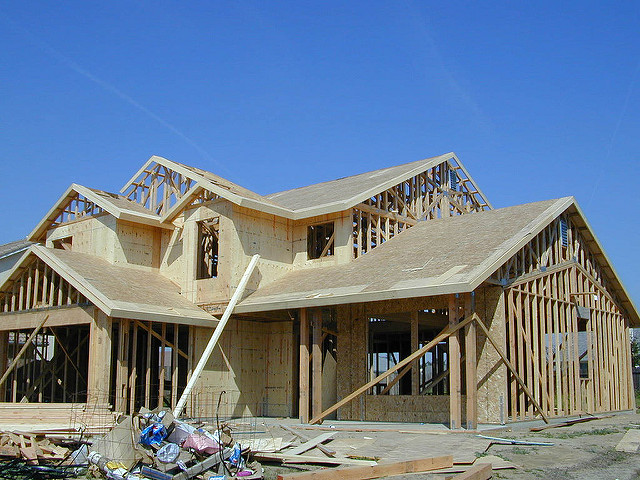
Federal policies that cut through the red tape by allowing new home construction on leased public lands would alleviate the undersupply of single-family homes. Homebuilders built 300,000 fewer homes in 2024 than in 1985 when there were 100 million fewer Americans.
The U.S. housing market is short an estimated 4.5 million homes. Freeing up land and reducing regulatory burdens would allow market forces and consumer preference to exercise their magic, which we can see in Texas metros like Austin, where housing costs are plummeting due to an epic home-building spree.
Read the rest of this piece at Spiked.
Joel Kotkin is the author of The Coming of Neo-Feudalism: A Warning to the Global Middle Class. He is the Roger Hobbs Presidential Fellow in Urban Futures at Chapman University and and directs the Center for Demographics and Policy there. He is Senior Research Fellow at the Civitas Institute at the University of Texas in Austin. Learn more at joelkotkin.com and follow him on Twitter @joelkotkin.
Michael Toth is a resident fellow at the Foundation for Research on Equal Opportunity and a research fellow at the University of Texas at Austin Civitas Institute.
Photo: Great Valley Center, via Flickr under CC 2.0 License.