When the AI Revolution is Over, Trades May Be the Only Jobs Left
The biggest long-range danger looming over the remaining liberal democracies does not come from U.S. President Donald Trump, Chinese President Xi Jinping, Russian President Vladimir Putin or the nutty mullahs in Iran now being pummelled. Instead, it comes from the seemingly inexorable force of technology that increasingly threatens not just to aid humanity, but replace it.
No matter what the political class proposes, artificial intelligence is poised to dominate our lives. Two-fifths of young Americans — the group most likely to be impacted by AI in the workforce — are willing to turn government over to it, according to a 2025 survey for the Heartland Institute. That’s a scary thought since, in war game scenarios, AIs tend to opt for nuclear war. Good thing AI is not running the Iran war!
Of course, AI can also provide some benefits, as a tool for medical breakthroughs and more efficient manufacturing. But it likely will also amplify our already serious “addiction” to screens and erode our privacy even further.
This is not primarily about national power, which may be a good thing as Canada, despite excellent research capacity and 1,500 firms competing in the space, is not going to determine the future of the technology.
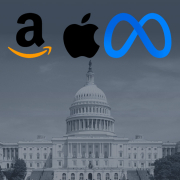
Canada ranks eighths in Tortoise’s latest Global AI Index. Yet the U.S., with its ability to raise trillions for AI, dominates along with China, where the cadres are desperate to exploit the new technology. The real winners, however, are not nations but mega-corporations. The top tech firms are already bigger than most countries; put together, their valuation exceeds China’s GDP. Apple alone has a market cap that’s higher than Canada’s GDP.
This global dominance stems from the fact that an estimated 2.5-billion people around the world own smartphones that run on their technologies. The tech oligarchs further bolster their market domination through massive lobbying operations. They are now like the barons at Runnymede, with more power and influence than any executive authority. In financial terms, they also dominate Wall Street’s investment economy, which rises and falls on the latest speculations on the technology.
Yet for all the enthusiasm, the public is far from sanguine about AI’s rise. Roughly three in five Americans, according to a 2023 poll, see it as a direct threat to civilization. Job fears are intense, as AI will clearly accelerate the loss of some blue-collar positions.
MIT predicts that at least 10 per cent of all U.S. jobs are at risk. Such worries are shared by the graduate students I teach with Marshall Toplansky about the impact of artificial intelligence. They expressed the most concern for white-collar jobs like human resources, media and video games.
Read the rest of this piece at National Post.
Joel Kotkin is the author of The Coming of Neo-Feudalism: A Warning to the Global Middle Class. He is the Roger Hobbs Presidential Fellow in Urban Futures at Chapman University and and directs the Center for Demographics and Policy there. He is Senior Research Fellow at the Civitas Institute at the University of Texas in Austin. Learn more at joelkotkin.com, follow him on Substack and Twitter @joelkotkin.
Illustration: Deepak Pal, via Flickr, under CC 2.0 License.